
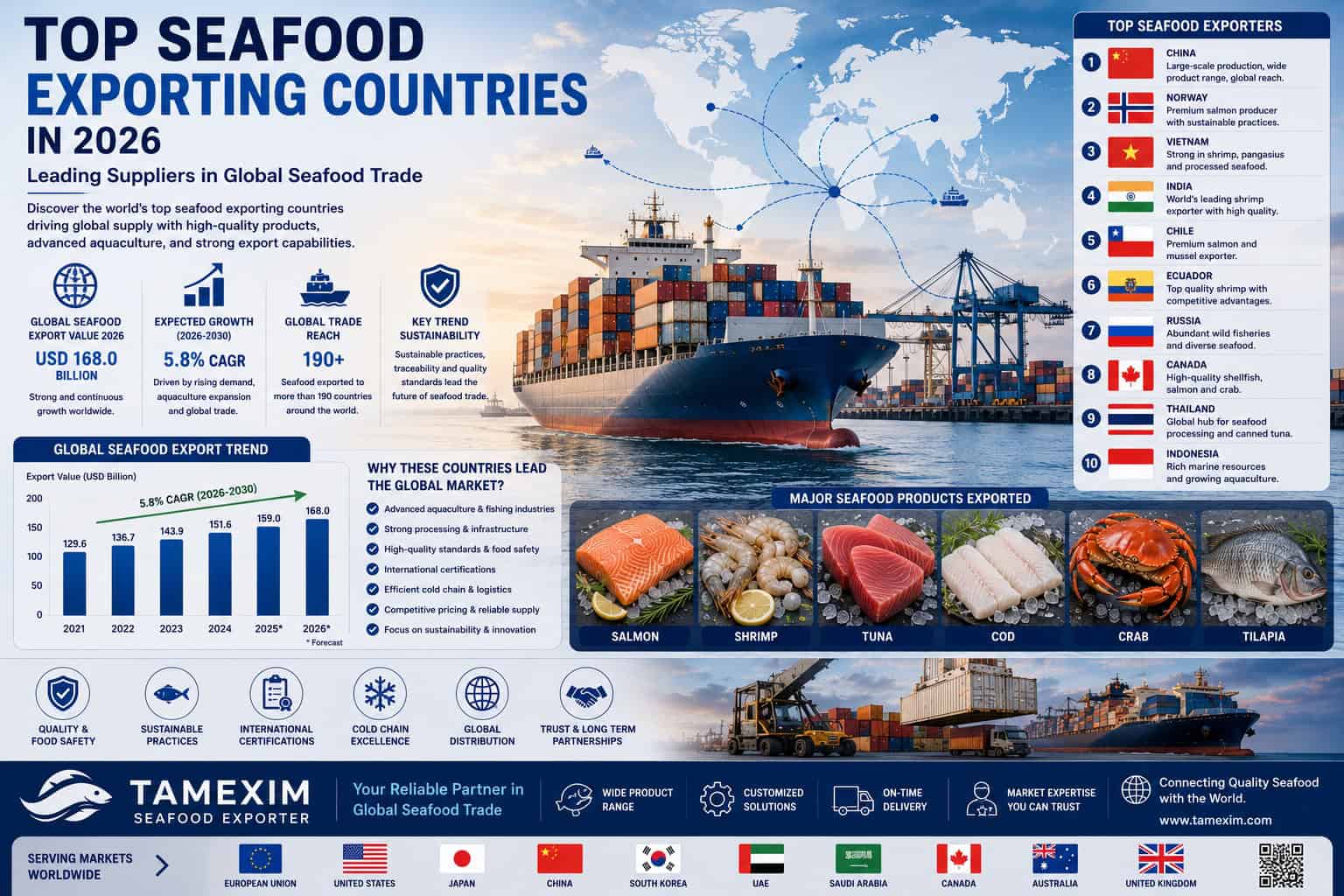
Top Seafood Exporting Countries in 2026: Leading Suppliers in Global Seafood Trade
SEO Title: Top Seafood Exporting Countries in 2026 | Global Seafood Export Market Analysis
Focus Keyword: Top Seafood Exporting Countries
Meta Description: Discover the world’s leading seafood exporting countries in 2026. Explore export trends, major seafood products, and opportunities shaping the future of international seafood trade.
Top Seafood Exporting Countries in 2026: Leading Suppliers in Global Seafood Trade
Seafood is among the most valuable commodities in international food trade. Every year, millions of tons of fish, shrimp, shellfish, and other aquatic products are transported across the globe to meet growing consumer demand. Behind this vast trade network are several countries that have established themselves as global leaders in seafood production and exports.
These nations combine advanced aquaculture, efficient fishing industries, modern processing facilities, strong cold chain infrastructure, and internationally recognized food safety systems to serve markets worldwide.
Understanding the leading seafood exporters helps importers identify reliable suppliers and allows exporters to benchmark their strategies against the industry’s top performers.
Why Seafood Export Leaders Matter
The world’s largest seafood exporters influence:
Global seafood prices
Supply chain stability
Product availability
International food safety standards
Sustainable fishing practices
Aquaculture innovation
These countries often set industry benchmarks for quality, efficiency, and regulatory compliance.
Top Seafood Exporting Countries in 2026
1. China
China remains one of the world’s largest seafood exporters thanks to its massive processing capacity, advanced aquaculture industry, and well-developed logistics network.
Major export products include:
Tilapia
Shrimp
Squid
Fish fillets
Processed seafood
Value-added seafood products
China exports to North America, Europe, Asia, and the Middle East.
2. Norway
Norway is globally recognized for premium Atlantic salmon production.
Its competitive advantages include:
Sustainable aquaculture
Advanced farming technology
Strict food safety standards
Efficient cold chain logistics
Strong international reputation
Major exports include:
Atlantic salmon
Cod
Mackerel
Herring
Norwegian seafood is supplied to more than 100 countries worldwide.
3. Vietnam
Vietnam has become one of Asia’s strongest seafood exporters.
The country specializes in:
Pangasius
Black tiger shrimp
Vannamei shrimp
Tuna
Processed seafood
Competitive labor costs and modern processing facilities support continued export growth.
4. India
India is one of the world’s largest shrimp exporters.
Key export products include:
Vannamei shrimp
Black tiger shrimp
Frozen fish
Cephalopods
The United States, China, Japan, and Europe remain important destinations for Indian seafood.
5. Chile
Chile is a major exporter of premium aquaculture products.
Its leading exports include:
Atlantic salmon
Coho salmon
Mussels
Trout
Chile continues to strengthen its position through investments in sustainable aquaculture and processing technologies.
6. Ecuador
Ecuador has experienced remarkable growth in shrimp production.
The country’s shrimp industry is recognized for:
High productivity
Competitive pricing
Consistent quality
Reliable supply
China, the United States, and Europe remain major export destinations.
7. Russia
Russia exports significant volumes of:
Pollock
Cod
Crab
Salmon
Its extensive marine resources support one of the world’s largest capture fisheries.
8. Canada
Canada supplies premium seafood products including:
Lobster
Snow crab
Salmon
Scallops
Mussels
Canadian seafood is highly regarded for quality and sustainability.
9. Thailand
Thailand remains a global seafood processing hub.
Major exports include:
Canned tuna
Shrimp
Processed seafood
Ready-to-eat seafood meals
The country benefits from advanced manufacturing capabilities and strong international trade relationships.
10. Indonesia
Indonesia’s vast coastline supports extensive fisheries and aquaculture.
Important export products include:
Tuna
Shrimp
Crab
Seaweed
Grouper
Government investment continues to strengthen export competitiveness.
Key Factors Behind Export Success
Successful seafood exporting countries typically share several characteristics:
Modern aquaculture systems
Efficient processing facilities
Strong food safety programs
International certifications
Reliable cold chain infrastructure
Advanced logistics
Skilled workforce
Government support for exports
These factors help suppliers meet the expectations of international buyers.
Emerging Trends
Global seafood exports are increasingly influenced by:
Sustainable fishing practices
Aquaculture expansion
Digital traceability
AI-powered production systems
Value-added seafood products
Eco-friendly packaging
Carbon footprint reduction
Exporters that embrace these trends are better positioned for long-term success.
Opportunities for New Exporters
New seafood exporters can compete successfully by focusing on:
High-quality niche products
Reliable supply chains
Strong customer service
Food safety compliance
Competitive pricing
Efficient logistics
Market-specific product development
Building trust is often more important than competing solely on price.
Frequently Asked Questions
Which country exports the most seafood?
China remains one of the world’s largest seafood exporters, while Norway leads in premium Atlantic salmon exports.
Which seafood products dominate global exports?
Shrimp, salmon, tuna, cod, tilapia, crab, squid, and processed seafood products account for a significant share of international seafood trade.
Why are certifications important?
International certifications help exporters demonstrate compliance with food safety, quality, and sustainability requirements, making them more attractive to global buyers.
What drives export growth?
Aquaculture expansion, technological innovation, efficient logistics, food safety, and growing global demand continue to drive seafood export growth.
Conclusion
The global seafood export market continues to evolve as consumer demand, sustainability expectations, and international trade requirements grow. Leading exporters such as China, Norway, Vietnam, India, Chile, and Ecuador demonstrate how investment in production, food safety, and innovation can create long-term competitive advantages.
For seafood companies seeking international growth, understanding the strategies of these leading exporters provides valuable insights into building resilient supply chains, improving product quality, and expanding into new markets.