
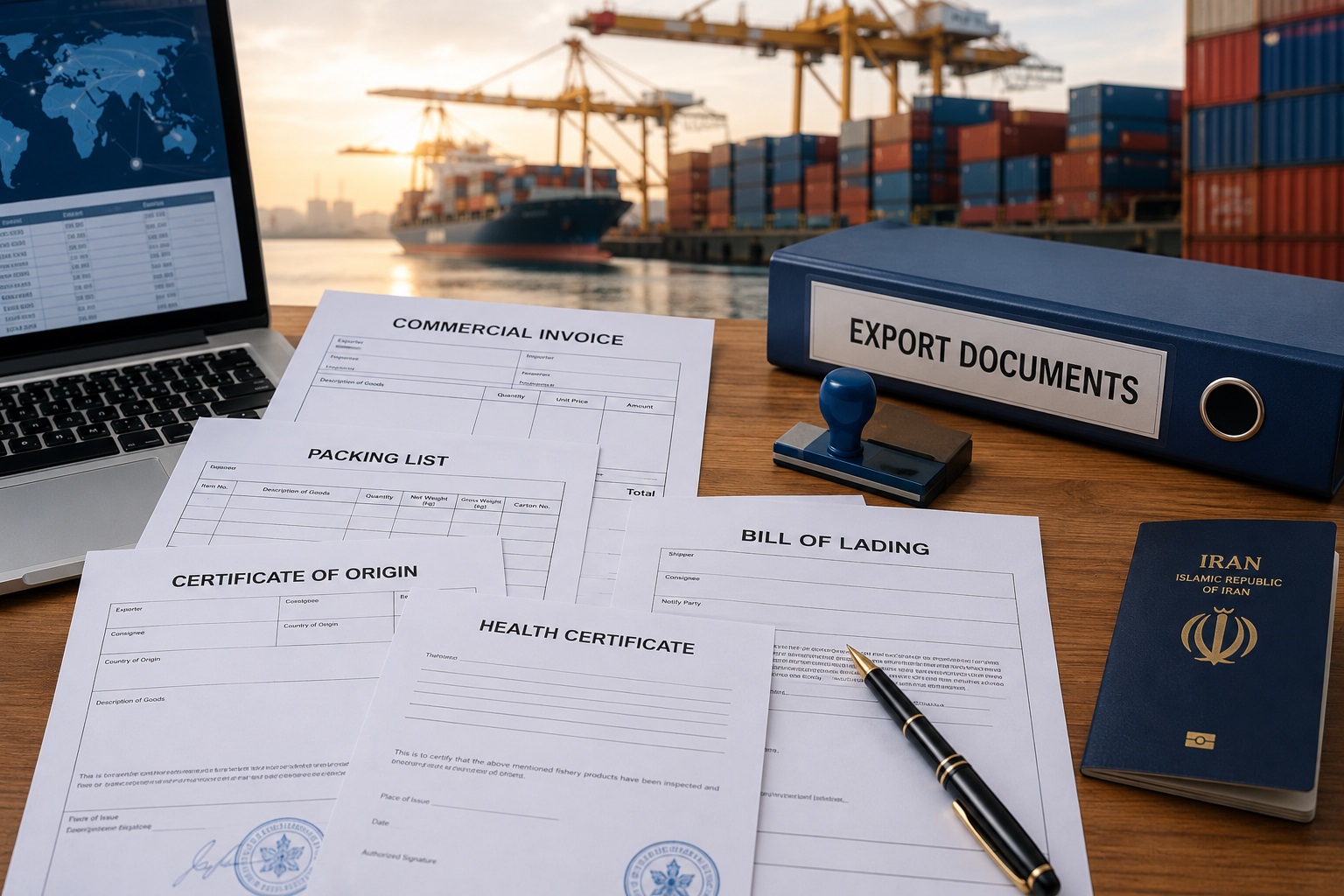
Introduction
International seafood trade requires more than high-quality products. Proper export documentation is essential for customs clearance, regulatory compliance, and smooth delivery. Missing or incorrect paperwork can cause shipment delays, additional costs, or even rejected cargo. This guide explains the key export documents commonly used in international seafood trade.
Table of Contents
- Why Export Documents Matter
- Commercial Invoice
- Packing List
- Certificate of Origin
- Health Certificate
- Veterinary Certificate
- Bill of Lading
- Customs Declaration
- Tips for Exporters
- FAQ
Why Export Documents Matter
Export documentation ensures that seafood shipments comply with the regulations of both the exporting and importing countries. Proper paperwork helps customs authorities verify the origin, quality, quantity, and safety of the products.
Benefits include:
- Faster customs clearance
- Reduced shipping delays
- Improved buyer confidence
- Compliance with international regulations
- Better shipment tracking
Commercial Invoice
The Commercial Invoice is one of the most important export documents. It provides detailed information about the transaction between the exporter and the importer.
It typically includes:
- Seller and buyer information
- Product description
- Quantity
- Unit price
- Total value
- Currency
- Payment terms
Packing List
A Packing List describes how the shipment is packed.
Typical information includes:
- Number of cartons
- Net weight
- Gross weight
- Package dimensions
- Product codes
- Packaging type
This document helps customs officers and logistics companies inspect and identify the shipment efficiently.
Certificate of Origin
The Certificate of Origin confirms the country where the seafood products were produced.
Importing countries often require this document to determine tariffs, customs duties, or eligibility under trade agreements.
Health Certificate
A Health Certificate verifies that the seafood products meet the required food safety standards and are suitable for human consumption.
This document is commonly required by food import authorities.
Veterinary Certificate
For many seafood products, a Veterinary Certificate confirms that the goods comply with veterinary and sanitary regulations established by the importing country.
Bill of Lading
The Bill of Lading (B/L) is issued by the shipping company and serves multiple purposes:
- Proof that the goods have been shipped
- Receipt issued by the carrier
- Document used to claim the cargo at the destination
Customs Declaration
The Customs Declaration provides the information required by customs authorities for export clearance.
It usually contains:
- HS Code
- Product value
- Exporter information
- Destination country
- Shipment details
Tips for Successful Documentation
Before shipping seafood internationally:
- Verify the import requirements of the destination country.
- Ensure all documents contain consistent information.
- Double-check product descriptions and quantities.
- Keep digital copies of all paperwork.
- Work with experienced logistics and customs professionals.
Frequently Asked Questions
Which document is the most important?
There is no single most important document. A successful shipment usually requires a complete and accurate set of export documents.
Do all countries require the same documents?
No. Documentation requirements may vary depending on the destination country, product type, and local import regulations.
Can missing documents delay a shipment?
Yes. Incomplete or incorrect paperwork is one of the most common reasons for customs delays.
Conclusion
Accurate export documentation is a critical part of successful seafood trade. Preparing the required paperwork correctly helps reduce delays, ensures regulatory compliance, and builds trust with international buyers.
Related Articles
- How to Export Seafood from Iran
- Cold Chain in Seafood Export
- Seafood Packaging Standards
- Incoterms for Seafood Trade