
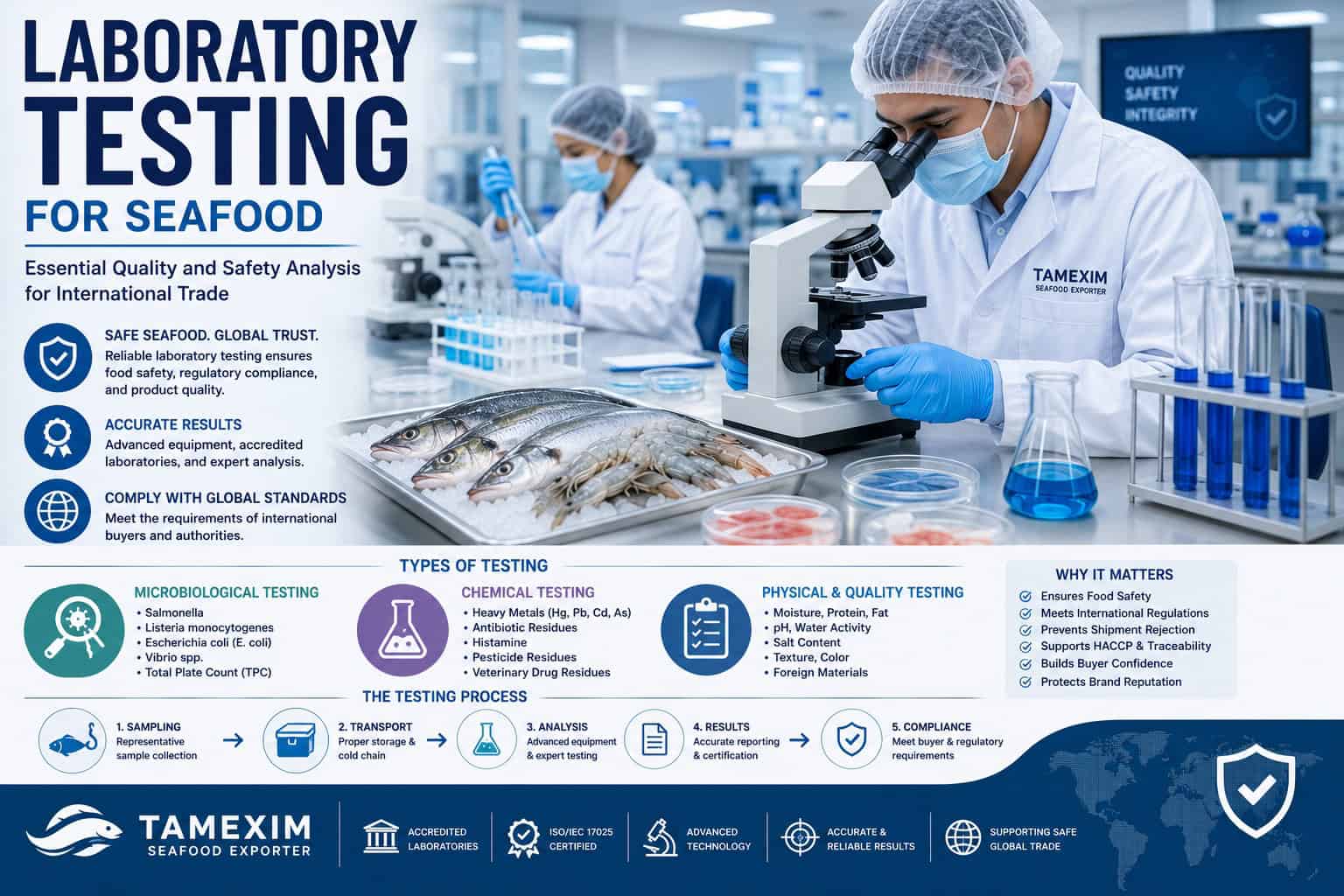
Laboratory Testing for Seafood: Essential Quality and Safety Analysis for International Trade
SEO Title: Laboratory Testing for Seafood | Essential Tests for Safe Seafood Export
Focus Keyword: Laboratory Testing for Seafood
Meta Description: Learn why laboratory testing is essential for seafood safety, quality assurance, and export compliance. Discover the key microbiological, chemical, and quality tests required in international seafood trade.
Laboratory Testing for Seafood: Essential Quality and Safety Analysis for International Trade
International seafood buyers expect more than fresh and visually appealing products. They require scientific evidence that every shipment complies with food safety regulations and quality standards. Laboratory testing plays a critical role in verifying that seafood products are safe for human consumption and meet the requirements of importing countries.
Whether exporting fresh fish, frozen shrimp, shellfish, or value-added seafood products, laboratory analysis helps identify biological, chemical, and physical hazards before products enter the global market. Reliable testing not only protects consumers but also reduces the risk of shipment rejection, recalls, and financial losses.
For seafood exporters, laboratory testing is an essential component of a comprehensive food safety management system.
Why Laboratory Testing Is Important
Seafood can be exposed to contamination at different stages of the supply chain, including harvesting, farming, processing, packaging, storage, and transportation.
Laboratory testing helps exporters:
Verify food safety
Meet international regulations
Improve product quality
Support HACCP programs
Demonstrate compliance to buyers
Reduce export risks
Protect brand reputation
Consistent laboratory testing also strengthens customer confidence and supports long-term business relationships.
Categories of Seafood Laboratory Tests
Seafood laboratories generally perform three major categories of analysis:
Microbiological testing
Chemical testing
Physical and quality testing
Each category evaluates different aspects of product safety and quality.
Microbiological Testing
Microbiological analysis detects harmful microorganisms that may cause foodborne illness.
Common tests include:
Salmonella
Seafood products should be free from Salmonella contamination. Detection may indicate poor hygiene, contaminated water, or cross-contamination during processing.
Listeria monocytogenes
Ready-to-eat seafood products are commonly tested for Listeria because this bacterium can grow even under refrigerated conditions.
Escherichia coli (E. coli)
E. coli testing helps evaluate sanitation practices and possible fecal contamination during production.
Vibrio Species
Marine products, particularly shellfish, are often tested for Vibrio species that may cause illness if consumed raw or undercooked.
Total Plate Count (TPC)
TPC measures the total number of aerobic bacteria present in a sample and provides an indication of overall hygiene and product freshness.
Chemical Testing
Chemical analysis verifies that seafood complies with international safety limits.
Important chemical tests include:
Heavy metals (Mercury, Lead, Cadmium, Arsenic)
Antibiotic residues
Histamine
Pesticide residues
Veterinary drug residues
Cleaning chemical residues
These analyses are especially important for export markets with strict regulatory requirements.
Histamine Testing
Histamine is particularly important for species such as:
Tuna
Bonito
Mackerel
Sardines
Improper temperature control after harvest may cause histamine formation.
Because histamine cannot be eliminated by cooking or freezing, prevention through cold chain management remains essential.
Heavy Metal Analysis
Industrial pollution and environmental contamination may increase heavy metal concentrations in seafood.
Routine laboratory testing helps verify compliance with international maximum residue limits.
| Heavy Metal | Potential Source | Health Concern |
|---|---|---|
| Mercury | Predatory fish | Neurological effects |
| Lead | Environmental pollution | Developmental toxicity |
| Cadmium | Industrial waste | Kidney damage |
| Arsenic | Natural and industrial sources | Long-term health risks |
Antibiotic Residue Testing
Aquaculture products are frequently screened for antibiotic residues.
Responsible seafood producers should:
Follow veterinary recommendations
Respect withdrawal periods
Maintain treatment records
Conduct routine residue testing
Compliance helps prevent shipment rejection.
Physical and Quality Testing
Laboratories also evaluate product quality characteristics such as:
Moisture content
Protein content
Fat content
Salt concentration
pH
Water activity
Texture
Color
Foreign materials
These tests support both quality assurance and product specification compliance.
Accredited Laboratories
Exporters should work with laboratories accredited under internationally recognized standards such as ISO/IEC 17025.
Accredited laboratories provide reliable, validated, and internationally accepted test results that buyers and regulatory authorities can trust.
Sampling Procedures
Accurate laboratory results depend on proper sampling.
Best practices include:
Representative sample selection
Sterile sampling equipment
Cold chain preservation
Correct labeling
Documented chain of custody
Timely transportation to the laboratory
Poor sampling techniques may produce misleading results.
Best Practices for Seafood Exporters
To strengthen food safety programs, exporters should:
Develop a routine laboratory testing schedule.
Test both raw materials and finished products.
Maintain complete laboratory records.
Review results regularly.
Investigate any non-conforming results immediately.
Integrate laboratory testing into HACCP verification activities.
Frequently Asked Questions
Why is laboratory testing necessary for seafood exports?
Laboratory testing verifies food safety, demonstrates compliance with import regulations, and helps prevent costly shipment rejections.
Which tests are most commonly required?
Microbiological analysis, heavy metal testing, histamine analysis, antibiotic residue screening, and quality testing are among the most common.
How often should seafood be tested?
Testing frequency depends on product type, risk assessment, customer requirements, and national regulations.
Can laboratory testing replace HACCP?
No. Laboratory testing verifies product safety, while HACCP is a preventive management system. Both should work together.
Conclusion
Laboratory testing is one of the strongest tools available for ensuring seafood safety and quality. By combining microbiological analysis, chemical testing, quality evaluation, and accredited laboratory services, exporters can demonstrate compliance with international standards and build confidence among global buyers.
A robust laboratory testing program not only protects consumers but also supports successful seafood exports, strengthens brand reputation, and contributes to long-term business growth.