
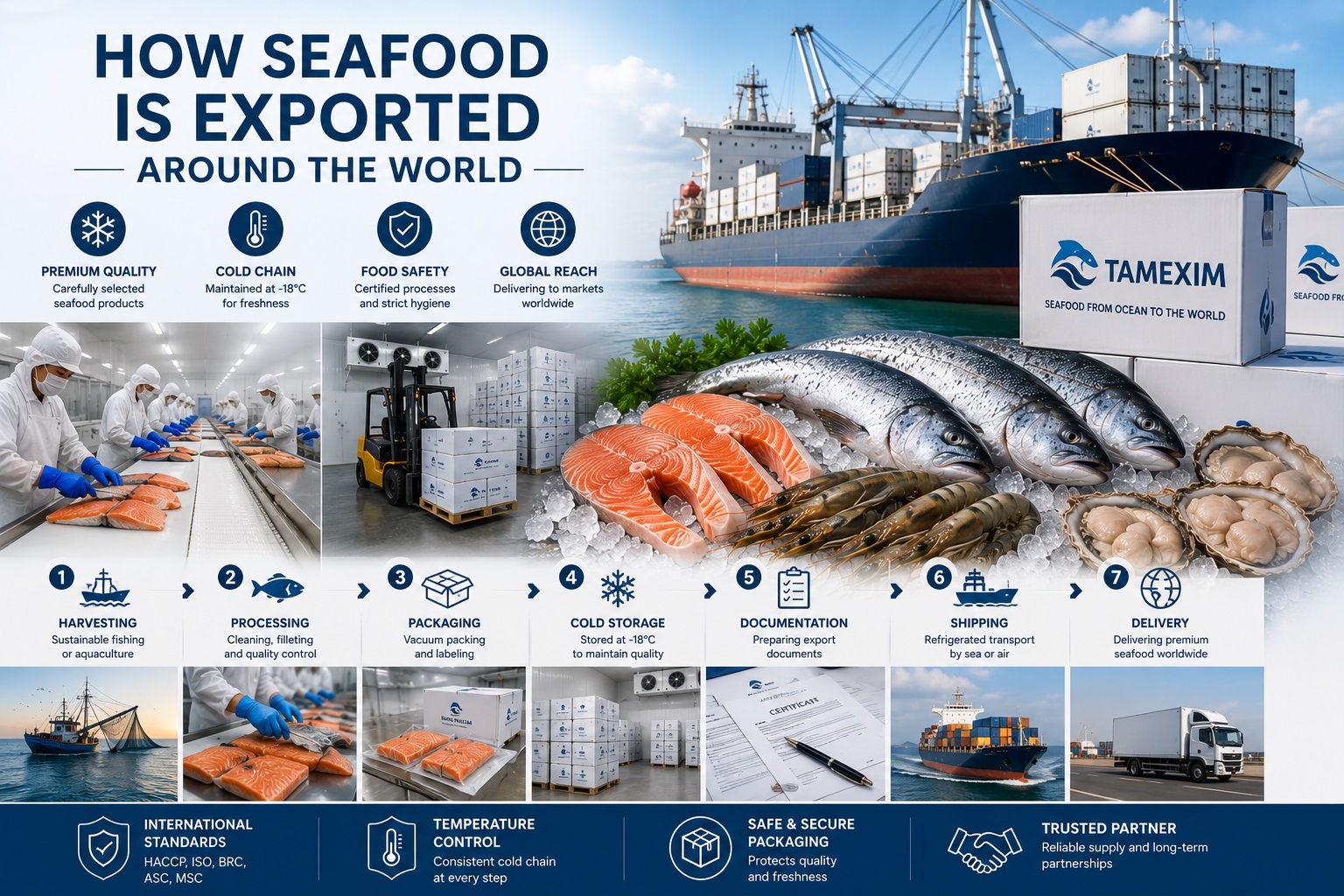
How Seafood Is Exported Around the World
The global seafood industry depends on an efficient export system that ensures products arrive fresh, safe, and in excellent condition. Every year, millions of tons of fish, shrimp, and other seafood products are transported across international borders to meet the growing demand for high-quality seafood.
From harvesting and processing to packaging, cold-chain logistics, and customs clearance, every step plays a vital role in maintaining product quality.
Step 1: Harvesting or Aquaculture Production
Seafood export begins with responsible harvesting or aquaculture farming.
Seafood generally comes from two sources:
- Wild-Caught Fisheries
- Aquaculture Farms
Modern aquaculture has become one of the fastest-growing food production sectors, helping meet global seafood demand while reducing pressure on wild fish stocks.
Step 2: Processing and Quality Control
After harvesting, seafood is quickly transferred to certified processing facilities.
Typical processing includes:
- Cleaning
- Sorting
- Filleting
- Portioning
- IQF Freezing
- Vacuum Packaging
- Quality Inspection
Strict hygiene standards help preserve freshness and food safety.
Step 3: Packaging
Proper packaging protects seafood during transportation.
Common export packaging includes:
- Vacuum Packs
- IQF Bags
- Cartons
- Master Export Boxes
- Retail Packaging
Export cartons should clearly display:
- Product Name
- Country of Origin
- Net Weight
- Production Date
- Expiration Date
- Batch Number
Step 4: Cold Chain Logistics
Temperature control is one of the most important factors in seafood export.
Frozen seafood is generally stored and transported at -18°C (0°F) or below.
Maintaining the cold chain helps:
- Preserve freshness
- Prevent spoilage
- Protect texture
- Ensure food safety
Step 5: International Certifications
Most importing countries require internationally recognized food safety standards.
Common certifications include:
- HACCP
- ISO 22000
- BRCGS
- ASC
- MSC
These certifications demonstrate that seafood has been processed under approved quality and safety systems.
Step 6: Customs Clearance
Before shipment, exporters prepare all required documentation.
Typical export documents include:
- Commercial Invoice
- Packing List
- Certificate of Origin
- Health Certificate
- Veterinary Certificate
- Bill of Lading
Accurate documentation helps avoid delays at customs.
Step 7: International Transportation
Seafood is transported using refrigerated containers and temperature-controlled logistics.
The most common transport methods are:
- Sea Freight
- Air Freight
- Refrigerated Trucks
The choice depends on product type, destination, and delivery time.
Major Seafood Importing Markets
The world’s leading seafood importers include:
- European Union
- United States
- China
- Japan
- South Korea
- Gulf Countries
Growing demand in these markets has increased opportunities for reliable seafood exporters.
Challenges in Seafood Export
Exporters commonly face challenges such as:
- Maintaining the cold chain
- Meeting food safety regulations
- Shipping delays
- Customs procedures
- Rising transportation costs
Experienced exporters minimize these risks through careful planning and quality management.
Why Choose an Experienced Seafood Exporter?
Working with a trusted exporter provides:
- Consistent quality
- Reliable logistics
- International certifications
- Flexible packaging
- On-time delivery
- Professional export support
Conclusion
Successful seafood export requires more than high-quality products. It depends on proper processing, certified food safety systems, reliable cold-chain logistics, and efficient international shipping.
Businesses that partner with experienced seafood exporters can ensure product quality, customer satisfaction, and long-term success in global markets.
Frequently Asked Questions
What temperature should frozen seafood be transported at?
Frozen seafood is generally transported at -18°C (0°F) or lower to maintain quality and safety.
Which documents are required for seafood export?
Common documents include the Commercial Invoice, Packing List, Certificate of Origin, Health Certificate, Veterinary Certificate, and Bill of Lading.
Why is the cold chain important?
The cold chain preserves freshness, prevents spoilage, and ensures seafood remains safe throughout transportation and storage.
Which countries import the most seafood?
Major importers include the European Union, the United States, China, Japan, South Korea, and many Gulf countries.