
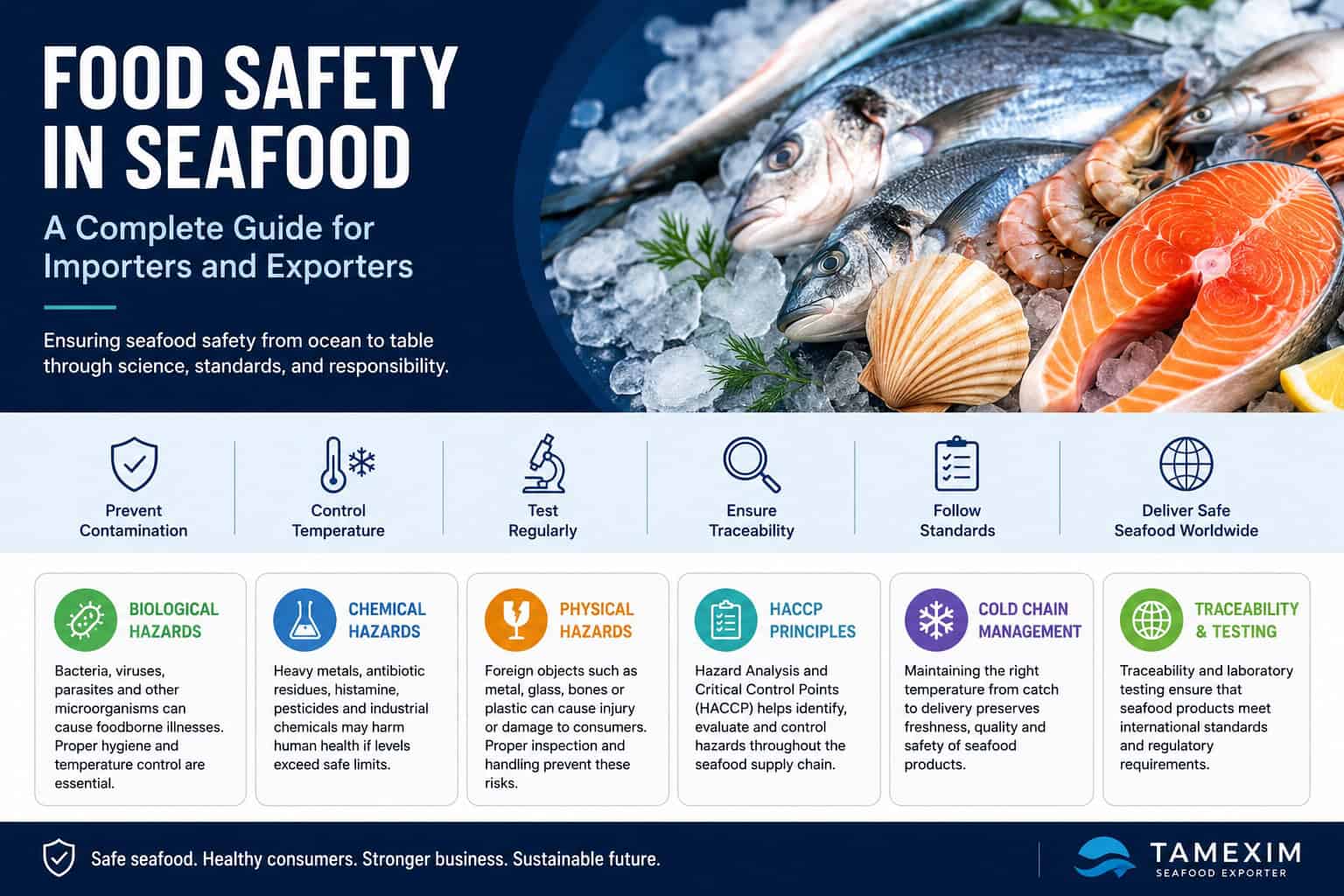
Food Safety in Seafood: A Complete Guide for Importers and Exporters
SEO Title: Food Safety in Seafood | Complete Guide for Importers & Exporters
Focus Keyword: Food Safety in Seafood
Meta Description: Discover the essential principles of seafood food safety, including HACCP, cold chain management, traceability, laboratory testing, and international regulations. A complete guide for seafood importers and exporters.
Food Safety in Seafood: A Complete Guide for Importers and Exporters
Seafood is one of the world’s most valuable food commodities, supplying billions of people with high-quality protein, omega-3 fatty acids, vitamins, and essential minerals. As international demand for seafood continues to rise, ensuring food safety has become more important than ever. Governments, retailers, distributors, and consumers expect seafood products to meet strict safety standards before they reach the market.
Unlike many other food products, seafood is highly perishable. Fish, shrimp, shellfish, and other aquatic products can quickly lose quality or become unsafe if they are not handled, processed, stored, and transported correctly. Even a short break in the cold chain can increase microbial growth, reduce shelf life, and result in product rejection.
For exporters, food safety is not only a legal requirement but also a competitive advantage. Companies that implement internationally recognized food safety systems gain easier access to global markets, build stronger relationships with buyers, and protect their reputation.
This guide explains the key principles of seafood food safety, the major hazards associated with seafood, and the best practices that importers and exporters should follow to ensure product safety and regulatory compliance.
What Is Seafood Food Safety?
Seafood food safety refers to all procedures and controls implemented to ensure that seafood remains safe for human consumption throughout the entire supply chain, from harvesting or farming to processing, packaging, transportation, retail, and final consumption.
Food safety management covers every stage of production, including:
Harvesting and aquaculture practices
Processing and sanitation
Cold storage
Freezing and refrigeration
Packaging hygiene
Transportation
Laboratory testing
Product traceability
Regulatory compliance
A comprehensive food safety program reduces the likelihood of contamination and helps ensure that seafood products meet international standards.
Why Food Safety Is Critical in International Seafood Trade
Global seafood trade involves long transportation routes, multiple handling stages, and strict import regulations. Because seafood can deteriorate rapidly, importing countries have established rigorous food safety requirements to protect public health.
Poor food safety practices may result in:
Shipment rejection at the destination port
Product recalls
Financial losses
Damage to brand reputation
Suspension of export licenses
Loss of customer confidence
On the other hand, companies with strong food safety systems benefit from:
Easier access to international markets
Long-term contracts with global buyers
Reduced waste and spoilage
Higher customer satisfaction
Improved operational efficiency
Better compliance with international regulations
For seafood exporters, investing in food safety is an investment in long-term business success.
The Three Main Categories of Seafood Hazards
International food safety authorities classify seafood hazards into three primary categories:
Biological hazards
Chemical hazards
Physical hazards
Each category requires specific preventive measures and continuous monitoring.
Biological Hazards
Biological hazards are microorganisms or biological agents capable of causing foodborne illness. These hazards represent one of the most significant risks in seafood production because many microorganisms can multiply rapidly if seafood is stored at inappropriate temperatures.
Salmonella
Salmonella is a pathogenic bacterium that may contaminate seafood through poor hygiene, contaminated water, or cross-contamination during processing.
Symptoms may include:
Fever
Diarrhea
Stomach cramps
Vomiting
Headache
Preventive measures include:
Employee hygiene training
Hand washing procedures
Equipment sanitation
Clean processing environments
HACCP implementation
Listeria monocytogenes
Listeria monocytogenes is especially concerning because it can survive and grow at refrigeration temperatures.
Products commonly associated with Listeria include:
Smoked salmon
Ready-to-eat seafood
Vacuum-packed seafood
High-risk populations include:
Pregnant women
Elderly individuals
Immunocompromised people
Seafood processors must implement environmental monitoring programs and regular sanitation procedures to minimize contamination.
Vibrio Species
Vibrio bacteria naturally occur in marine environments and are commonly associated with raw or undercooked shellfish.
Important species include:
Vibrio parahaemolyticus
Vibrio vulnificus
Proper temperature control immediately after harvest is essential to reduce the risk of Vibrio growth.
Clostridium botulinum
This bacterium produces one of the most powerful toxins known and may develop in oxygen-free environments such as improperly processed vacuum-packed seafood.
Preventive measures include:
Correct refrigeration
Validated thermal processing
Proper salt concentration
Strict HACCP controls
Parasites in Seafood
Certain wild fish species may naturally contain parasites.
Common parasites include:
Anisakis
Diphyllobothrium
Opisthorchis
Species frequently monitored include:
Salmon
Cod
Herring
Mackerel
Proper freezing before raw consumption effectively destroys most parasites and is required by many international regulations.
Chemical Hazards
Chemical hazards may originate from the aquatic environment, aquaculture practices, industrial pollution, or processing operations.
Major chemical hazards include:
Heavy metals
Antibiotic residues
Histamine
Pesticides
Industrial contaminants
Cleaning chemical residues
Unlike bacterial contamination, chemical hazards often cannot be detected by appearance, smell, or taste. Laboratory analysis is therefore essential.
Heavy Metals
Heavy metals accumulate naturally in aquatic ecosystems and may become concentrated in larger predatory fish through biomagnification.
The most important heavy metals include:
| Heavy Metal | Main Sources | Potential Health Risk |
|---|---|---|
| Mercury | Large predatory fish | Neurological damage |
| Cadmium | Industrial pollution | Kidney damage |
| Lead | Environmental contamination | Developmental disorders |
| Arsenic | Natural deposits and pollution | Long-term toxicity |
Routine laboratory testing helps exporters demonstrate compliance with the maximum residue limits established by importing countries.
Antibiotic Residues
Modern aquaculture sometimes requires veterinary medicines to control disease outbreaks. However, antibiotics must be used responsibly.
Responsible farms follow:
Veterinary supervision
Approved medicines only
Withdrawal periods
Residue monitoring
Good Aquaculture Practices (GAP)
Failure to comply with residue limits may result in shipment rejection and regulatory action.
Histamine Formation
Histamine is one of the most important chemical hazards in seafood.
It develops when certain fish species are exposed to elevated temperatures after harvest.
High-risk species include:
Tuna
Mackerel
Bonito
Sardines
Unlike bacteria, histamine cannot be destroyed by cooking or freezing. Prevention depends entirely on maintaining the cold chain from harvest to final delivery.