
Introduction
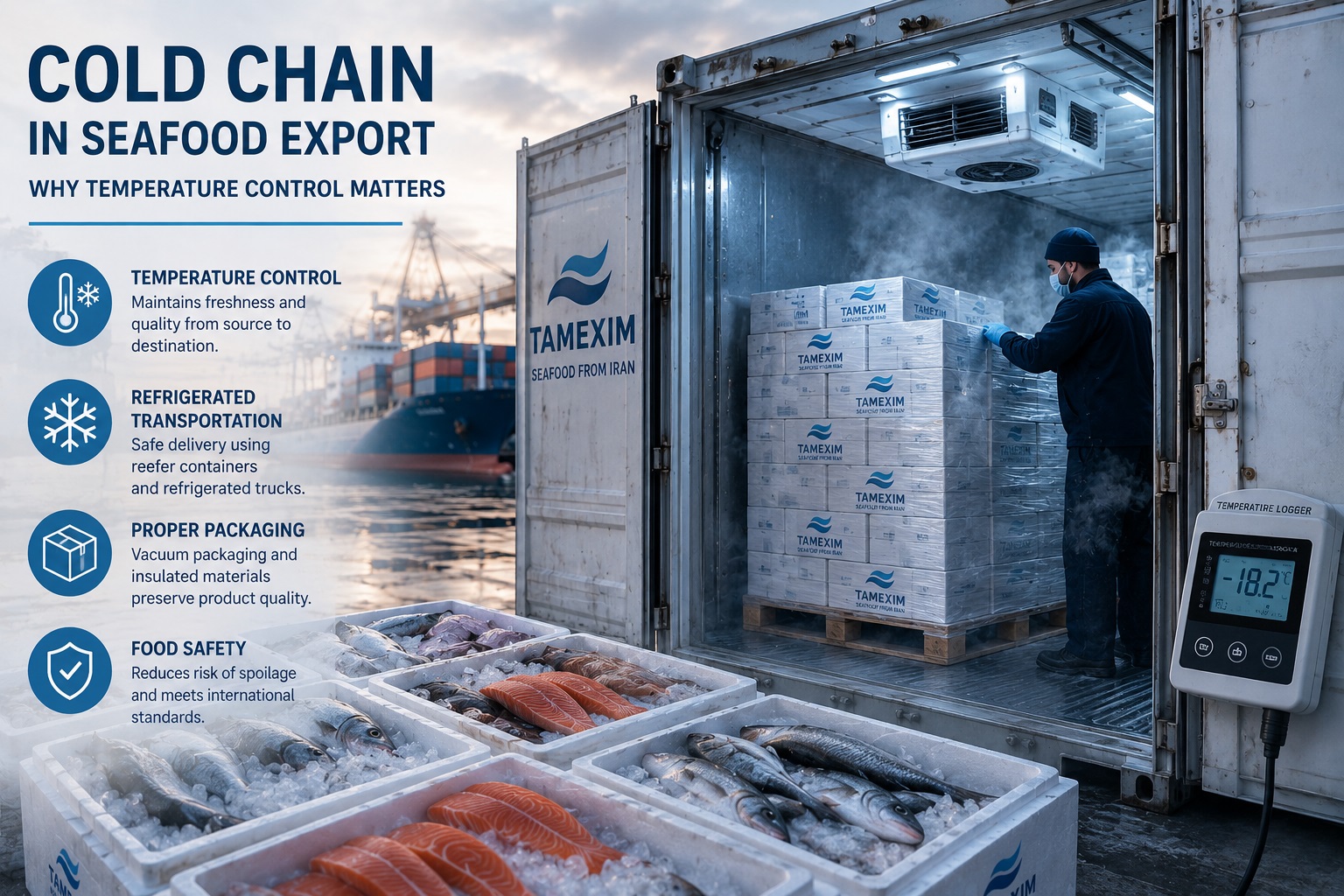
Seafood is one of the most temperature-sensitive food products in international trade. Maintaining a continuous cold chain from processing to final delivery is essential to preserve freshness, food safety, and product quality. Even a short interruption in temperature control can reduce shelf life and affect customer satisfaction.
Table of Contents
- What Is the Cold Chain?
- Why It Is Essential for Seafood
- Recommended Storage Temperatures
- Refrigerated Transportation
- Packaging for Cold Chain
- Temperature Monitoring
- Common Cold Chain Mistakes
- Best Practices
- FAQ
What Is the Cold Chain?
The cold chain is a temperature-controlled supply chain that keeps seafood within the required temperature range during processing, storage, transportation, and delivery.
Why Cold Chain Is Important
Proper cold chain management helps:
- Preserve freshness
- Maintain product quality
- Prevent bacterial growth
- Extend shelf life
- Meet international food safety standards
- Reduce product loss during transportation
Recommended Storage Temperatures
| Product | Recommended Temperature |
|---|---|
| Fresh Seafood | 0°C to 4°C |
| Frozen Seafood | -18°C or below |
| Deep Frozen Products | -30°C (when required) |
Refrigerated Transportation
Seafood is commonly transported using:
- Reefer Containers
- Refrigerated Trucks
- Air Cargo with Temperature Control
The transportation method depends on product type, destination, and delivery time.
Packaging for Cold Chain
Common packaging methods include:
- Vacuum Packaging
- IQF Packaging
- Insulated Cartons
- Gel Ice Packs (for fresh products)
- Food-grade Plastic Liners
Proper packaging helps maintain temperature and protects products during transit.
Temperature Monitoring
Continuous monitoring is essential throughout the supply chain.
Common tools include:
- Digital Temperature Loggers
- Data Loggers
- Smart Sensors
- GPS Temperature Tracking
These systems provide valuable records for quality assurance and customer confidence.
Common Cold Chain Mistakes
Avoid these common issues:
- Delayed loading or unloading
- Broken packaging
- Inconsistent storage temperatures
- Overloaded containers
- Lack of temperature monitoring
- Poor warehouse management
Best Practices
To maintain seafood quality:
- Pre-cool products before shipment.
- Use certified refrigerated containers.
- Minimize door opening during loading.
- Monitor temperatures continuously.
- Follow international food safety standards.
- Choose experienced logistics partners.
Frequently Asked Questions
Why is the cold chain important?
Because seafood quality and safety depend on maintaining the correct temperature throughout the supply chain.
What happens if the cold chain is broken?
Temperature fluctuations can reduce product quality, shorten shelf life, and increase the risk of spoilage.
What is the standard temperature for frozen seafood?
Most frozen seafood products are transported and stored at -18°C or below.
Conclusion
A reliable cold chain is essential for successful seafood exports. By maintaining proper temperatures, using appropriate packaging, and working with experienced logistics providers, exporters can ensure that seafood reaches international buyers in excellent condition.
Related Articles
- How to Export Seafood from Iran
- Seafood Export Documents Explained
- Seafood Packaging Standards
- Incoterms for Seafood Trade