
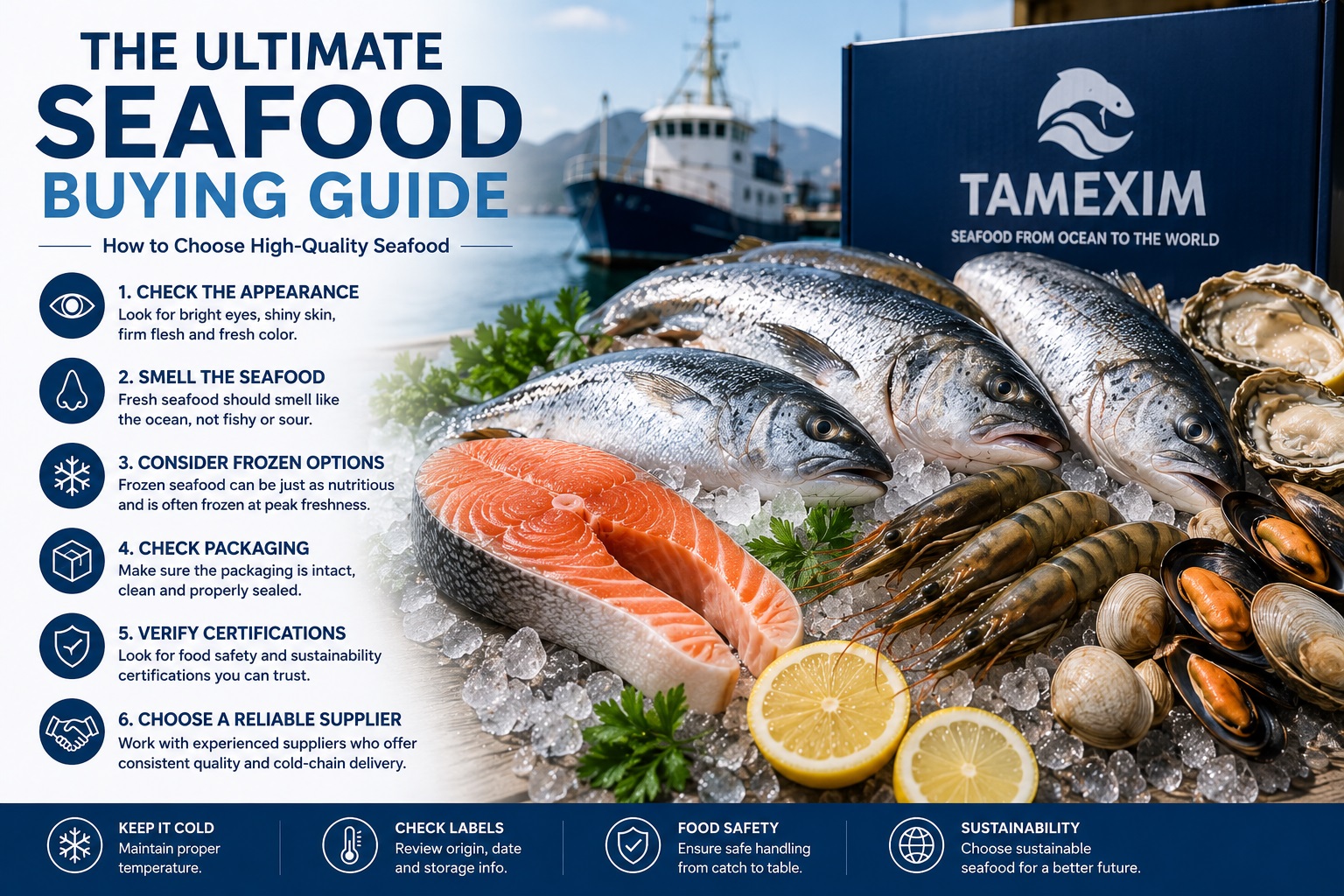
The Ultimate Seafood Buying Guide
Whether you’re a home cook, restaurant owner, seafood distributor, or international importer, choosing high-quality seafood is essential. Freshness, proper handling, packaging, and supplier reliability all play a critical role in ensuring excellent taste, food safety, and customer satisfaction.
This guide will help you identify premium seafood and make confident purchasing decisions.
Why Seafood Quality Matters
High-quality seafood is not only more flavorful but also safer and more nutritious. Poor handling or improper storage can reduce shelf life, affect texture, and compromise food safety.
Choosing premium seafood helps ensure:
- Better taste and texture
- Higher nutritional value
- Improved food safety
- Longer shelf life
- Greater customer satisfaction
Step 1: Check the Appearance
The appearance of seafood is often the first indicator of quality.
Whole Fish
Look for:
- Bright, clear eyes
- Shiny, metallic skin
- Firm flesh
- Bright red or pink gills
- Natural moisture
Avoid fish with:
- Cloudy or sunken eyes
- Dry skin
- Brown gills
- Soft flesh
Fish Fillets
Quality fillets should have:
- Uniform color
- Firm texture
- No excessive liquid
- No discoloration
Shrimp
Fresh shrimp should have:
- Firm body
- Bright shell
- Mild ocean smell
- No black spots
- No slimy texture
Step 2: Smell the Seafood
Fresh seafood should smell like the ocean or clean seawater.
Avoid seafood with:
- Strong fishy odor
- Sour smell
- Ammonia-like odor
A strong unpleasant smell usually indicates poor freshness.
Step 3: Understand Fresh vs Frozen
Modern freezing technologies preserve seafood exceptionally well.
Frozen seafood offers:
- Longer shelf life
- Consistent quality
- Easier transportation
- Reduced waste
- Reliable year-round availability
For international buyers, frozen seafood is often the preferred option.
Step 4: Check Packaging Quality
Proper packaging protects seafood during storage and transportation.
Common packaging methods include:
- Vacuum Packaging
- IQF (Individually Quick Frozen)
- Block Frozen
- Glazed Frozen Products
Good packaging should be:
- Clean
- Undamaged
- Properly sealed
- Clearly labeled
Step 5: Verify Certifications
Trusted seafood suppliers follow internationally recognized standards.
Look for certifications such as:
- HACCP
- ISO 22000
- BRCGS
- MSC (for sustainable wild-caught seafood)
- ASC (for responsibly farmed seafood)
These certifications indicate that products meet recognized food safety and quality requirements.
Step 6: Choose the Right Supplier
A reliable seafood supplier should offer:
- Consistent product quality
- Export experience
- Cold-chain logistics
- Flexible packaging
- Product traceability
- Professional customer support
Long-term partnerships with trusted suppliers help ensure stable supply and consistent quality.
Common Mistakes When Buying Seafood
Avoid these common errors:
- Buying based only on price
- Ignoring storage conditions
- Overlooking certifications
- Choosing suppliers without export experience
- Breaking the cold chain during transportation
Seafood Buying Checklist
Before purchasing seafood, make sure you check:
✔ Appearance
✔ Smell
✔ Packaging
✔ Storage temperature
✔ Certifications
✔ Supplier reputation
✔ Product traceability
✔ Expiration date
Conclusion
Buying premium seafood requires more than simply choosing the lowest price. Evaluating freshness, packaging, certifications, and supplier reliability ensures you receive safe, high-quality products that meet your expectations.
Whether you are purchasing seafood for your family, restaurant, or international business, informed buying decisions help protect quality, reduce waste, and build customer trust.
Frequently Asked Questions
How can I tell if seafood is fresh?
Look for clear eyes, firm flesh, a clean ocean smell, bright gills (for whole fish), and undamaged packaging.
Is frozen seafood a good choice?
Yes. Properly frozen seafood maintains excellent quality and nutritional value, making it ideal for both consumers and international trade.
Which certifications should seafood suppliers have?
Common certifications include HACCP, ISO 22000, BRCGS, MSC, and ASC, depending on the product and production method.
Why is the cold chain important?
Maintaining the cold chain helps preserve freshness, prevent spoilage, and ensure food safety throughout transportation and storage.
Call to Action
Looking for a Trusted Seafood Supplier?
Tamexim supplies premium seafood products with strict quality control, export-ready packaging, and reliable cold-chain logistics for customers around the world.