
Introduction
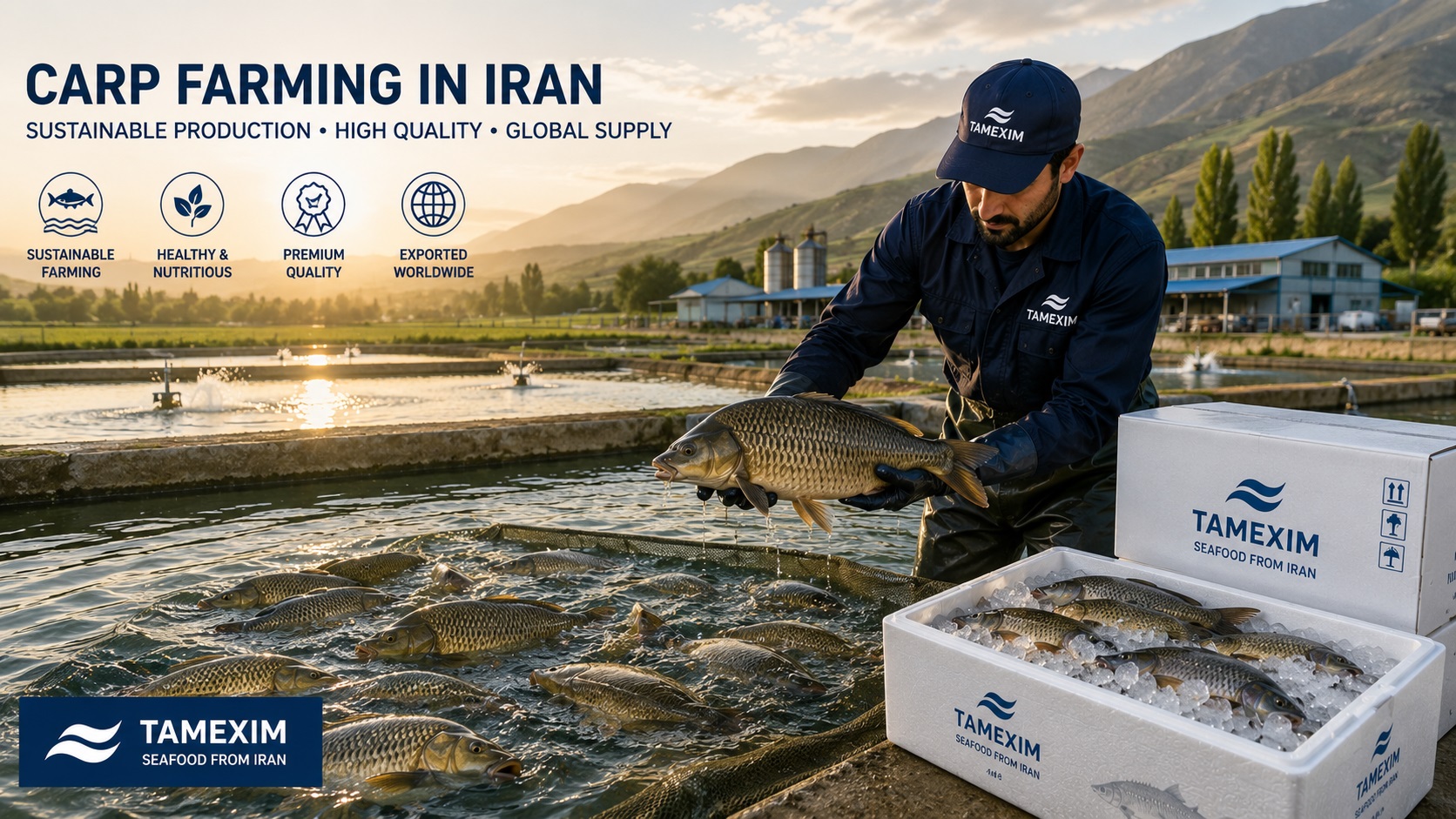
Carp is one of the most widely farmed freshwater fish species in Iran and plays an important role in the country’s aquaculture sector. Thanks to suitable climate conditions, abundant freshwater resources, and decades of farming experience, Iranian carp is recognized as a reliable and affordable seafood product for both domestic consumption and export markets.
With modern farming practices and continuous quality improvements, carp farming has become a sustainable source of premium freshwater fish.
Table of Contents
- Carp Farming in Iran
- Major Farming Regions
- Farming Methods
- Product Quality
- Nutritional Benefits
- Harvest Sizes
- Export Opportunities
- Frequently Asked Questions
Carp Farming in Iran
Carp farming has a long history in Iran and represents a significant share of freshwater fish production. Farmers use modern aquaculture techniques to improve fish health, growth performance, and production efficiency.
The most commonly farmed carp species include:
- Common Carp
- Grass Carp
- Silver Carp
- Bighead Carp
These species are valued for their adaptability, fast growth, and consistent market demand.
Major Farming Regions
Carp is farmed across several provinces with favorable environmental conditions, including:
- Khuzestan
- Mazandaran
- Golestan
- Gilan
- Fars
These areas provide suitable ponds, reservoirs, and freshwater resources for large-scale aquaculture.
Farming Methods
Iranian carp is typically raised using:
- Earthen ponds
- Reservoir farming
- Polyculture systems
- Semi-intensive aquaculture
These methods support healthy fish growth while making efficient use of natural resources.
Product Quality
Iranian carp is appreciated for:
- Fresh taste
- Firm meat texture
- Reliable quality
- Consistent supply
- Competitive pricing
Export products are commonly available as:
- Whole Fish
- Gutted Fish
- Frozen Whole Fish
- Customized Export Packaging
Nutritional Benefits
Carp is a nutritious freshwater fish containing:
- High-quality protein
- Omega-3 fatty acids
- Vitamin B12
- Vitamin D
- Phosphorus
- Selenium
It provides a balanced nutritional profile suitable for a wide range of consumers.
Harvest Sizes
Typical export sizes include:
| Product | Average Size |
|---|---|
| Small Carp | 600–1000 g |
| Medium Carp | 1–2 kg |
| Large Carp | 2–4 kg |
| Premium Carp | 4 kg and above |
Different export markets may require customized sizes depending on customer preferences.
Export Opportunities
Iranian carp continues to gain attention in regional and international seafood markets because of:
- Stable production capacity
- Affordable pricing
- Flexible packaging options
- Reliable year-round supply
- Growing export infrastructure
Fresh and frozen products can be supplied according to customer specifications.
Frequently Asked Questions
Is Iranian carp suitable for export?
Yes. Iranian carp is exported in fresh and frozen forms to various international markets, depending on local import regulations.
Which packaging options are available?
Whole fish, gutted fish, frozen products, and customized export packaging are commonly available.
Why choose Iranian carp?
Iranian carp offers a combination of reliable quality, competitive pricing, and consistent supply, making it an attractive option for wholesalers and distributors.
Conclusion
Carp farming is an essential part of Iran’s aquaculture industry, providing high-quality freshwater fish for both domestic and international markets. Through sustainable farming practices and modern production systems, Iranian carp has become a dependable seafood choice for importers seeking value, quality, and long-term supply.
Related Articles
- Rainbow Trout Farming in Iran
- Sturgeon Farming and Caviar Production
- Iranian Salmon Industry
- European Sea Bass Farming in Iran