
Introduction
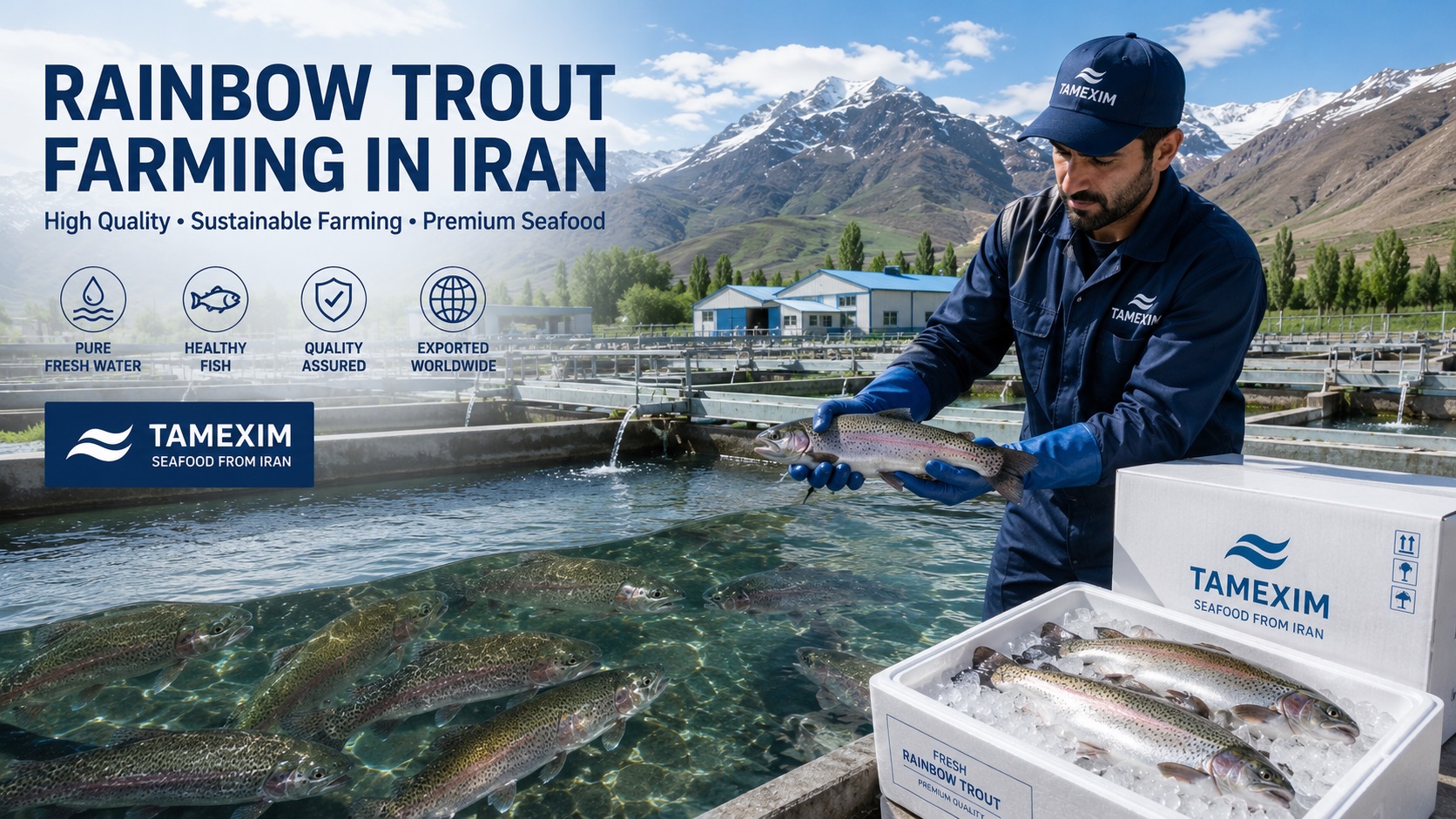
Rainbow trout (Oncorhynchus mykiss) is one of the most valuable farmed fish species in Iran and plays a significant role in the country’s aquaculture industry. Thanks to abundant freshwater resources, favorable climatic conditions, and decades of farming experience, Iran has become one of the world’s leading producers of rainbow trout.
Today, Iranian rainbow trout is recognized for its excellent meat quality, consistent production standards, and growing presence in international seafood markets.
Table of Contents
- Rainbow Trout in Iran
- Major Farming Regions
- Farming Methods
- Product Quality
- Nutritional Benefits
- Harvest Sizes
- Export Opportunities
- Frequently Asked Questions
Rainbow Trout in Iran
Rainbow trout is widely farmed throughout Iran using modern aquaculture systems. The industry has experienced continuous growth over the past decades due to increasing domestic demand and expanding export opportunities.
Iran’s trout farms combine natural spring water with advanced farming practices to produce healthy fish with excellent texture and flavor.
Major Farming Regions
Several provinces are known for high-quality rainbow trout production, including:
- Chaharmahal and Bakhtiari
- Mazandaran
- Lorestan
- Fars
- Kohgiluyeh and Boyer-Ahmad
These regions offer clean water resources and ideal environmental conditions for sustainable trout farming.
Farming Methods
Iranian rainbow trout is commonly raised using:
- Flow-through raceway systems
- Freshwater ponds
- Spring-fed farms
- Modern aquaculture facilities
These production methods help maintain water quality, fish health, and consistent product quality.
Product Quality
Iranian rainbow trout is valued for:
- Firm texture
- Bright natural color
- Mild flavor
- High freshness
- Excellent processing performance
Products are available as:
- Whole Fish
- Gutted Fish
- Fillets
- Frozen Products
- Vacuum-Packed Products
Nutritional Benefits
Rainbow trout is naturally rich in:
- High-quality protein
- Omega-3 fatty acids
- Vitamin D
- Vitamin B12
- Selenium
- Phosphorus
It is considered a healthy seafood choice for consumers seeking nutritious and premium-quality fish.
Harvest Sizes
Common export sizes include:
| Product | Average Size |
|---|---|
| Whole Trout | 300–500 g |
| Medium Trout | 500–800 g |
| Large Trout | 800–1200 g |
| Premium Trout | 1.2–3 kg |
Different markets may require specific sizes depending on consumer preferences and processing needs.
Export Opportunities
Iranian rainbow trout is exported to various international markets due to its:
- Competitive pricing
- Reliable quality
- Modern processing facilities
- Flexible packaging options
- Growing international demand
Export products can be supplied fresh or frozen according to customer requirements.
Frequently Asked Questions
Is Iranian rainbow trout suitable for export?
Yes. Iranian rainbow trout meets the quality standards required by many international seafood markets.
Which packaging options are available?
Products can be supplied as vacuum-packed fillets, whole fish, frozen blocks, or customized export packaging.
What makes Iranian trout competitive?
Its combination of high quality, favorable farming conditions, and competitive pricing makes it attractive for international buyers.
Conclusion
Rainbow trout farming has become one of the cornerstones of Iran’s aquaculture industry. With modern farming techniques, high-quality freshwater resources, and strong export potential, Iranian rainbow trout continues to earn recognition in global seafood markets. For importers seeking reliable and premium seafood products, Iran remains an excellent sourcing destination.
Related Articles
- Sturgeon Farming and Caviar Production
- Carp Farming in Iran
- Iranian Salmon Industry
- European Sea Bass Farming in Iran