
Introduction
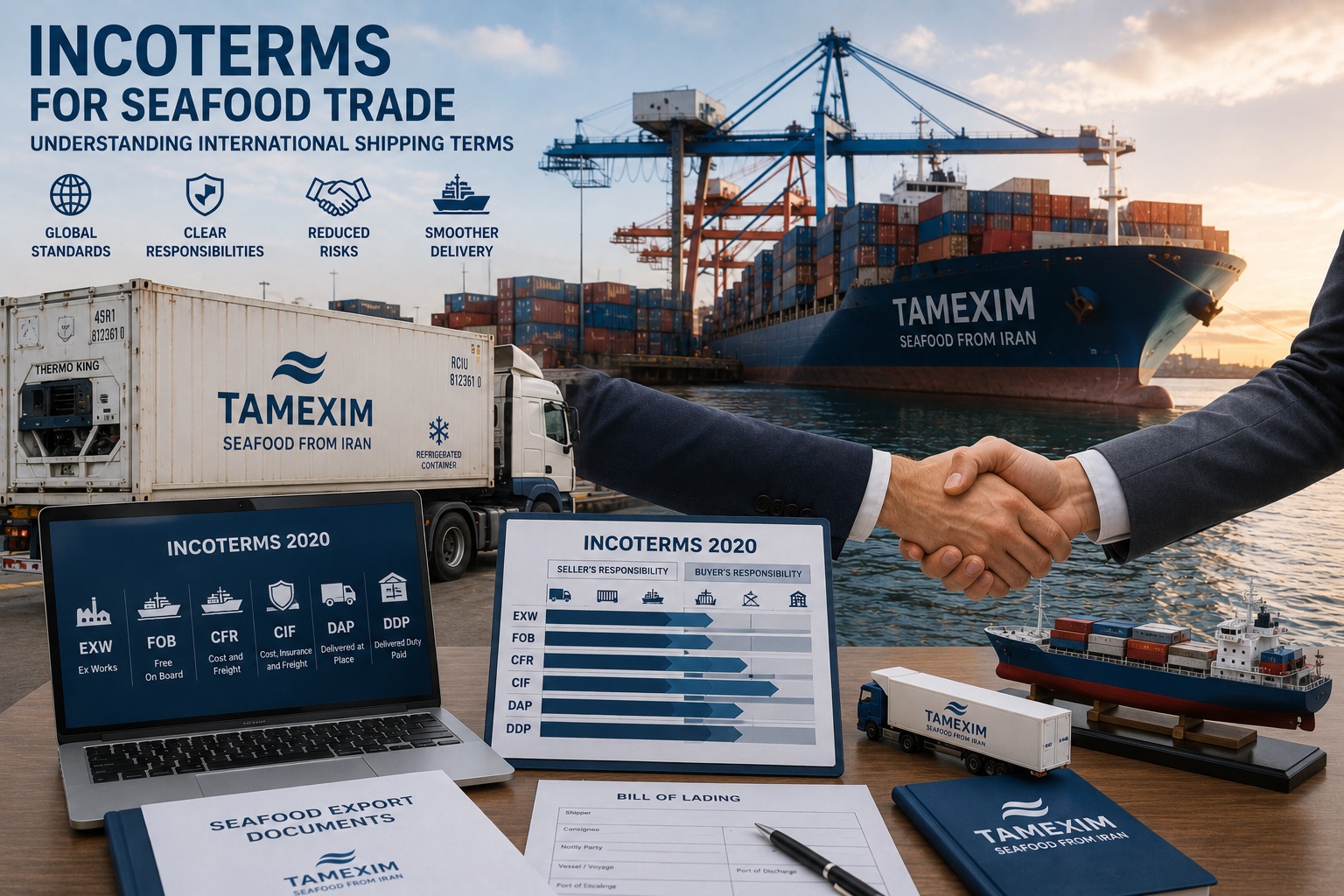
International seafood trade involves more than shipping products. Buyers and sellers must clearly understand their responsibilities regarding transportation, insurance, customs clearance, and delivery. Incoterms provide a globally recognized set of rules that simplify international trade and reduce misunderstandings.
Table of Contents
- What Are Incoterms?
- Why Incoterms Matter
- Most Common Incoterms
- Choosing the Right Incoterm
- Responsibilities of Buyers and Sellers
- Common Mistakes
- FAQ
What Are Incoterms?
Incoterms (International Commercial Terms) are standardized trade rules published by the International Chamber of Commerce (ICC). They define the responsibilities of buyers and sellers during international shipments.
Why Incoterms Matter
Using the correct Incoterm helps:
- Avoid misunderstandings
- Define transportation responsibilities
- Clarify customs obligations
- Determine risk transfer
- Improve international trade efficiency
Common Incoterms
| Incoterm | Meaning | Main Responsibility |
|---|---|---|
| EXW | Ex Works | Buyer handles almost everything |
| FOB | Free On Board | Seller delivers goods onto the vessel |
| CFR | Cost and Freight | Seller pays freight, buyer assumes risk after loading |
| CIF | Cost, Insurance and Freight | Seller pays freight and insurance |
| DAP | Delivered at Place | Seller delivers to destination, buyer handles import clearance |
| DDP | Delivered Duty Paid | Seller manages nearly all costs and duties |
Choosing the Right Incoterm
The best Incoterm depends on:
- Destination country
- Product type
- Shipping method
- Customer preference
- Insurance requirements
Responsibilities
Seller
- Product preparation
- Packaging
- Export documentation
- Customs clearance (depending on the Incoterm)
- Delivery according to agreed terms
Buyer
- Import customs procedures
- Payment
- Local transportation
- Duties and taxes (depending on the Incoterm)
Common Mistakes
Avoid these issues:
- Choosing the wrong Incoterm
- Ignoring insurance requirements
- Misunderstanding risk transfer
- Failing to define delivery points clearly
Frequently Asked Questions
Which Incoterm is most common in seafood exports?
FOB and CIF are among the most commonly used terms for international seafood shipments.
Does the seller always pay for shipping?
No. It depends on the selected Incoterm.
Are Incoterms legally binding?
They become binding when both parties include the chosen Incoterm in their sales contract.
Conclusion
Understanding Incoterms helps seafood exporters and importers communicate clearly, manage risks effectively, and ensure smoother international transactions. Selecting the appropriate shipping term can reduce costs, prevent disputes, and improve overall supply chain efficiency.
Related Articles
- How to Export Seafood from Iran
- Seafood Export Documents Explained
- Cold Chain in Seafood Export
- Seafood Packaging Standards