
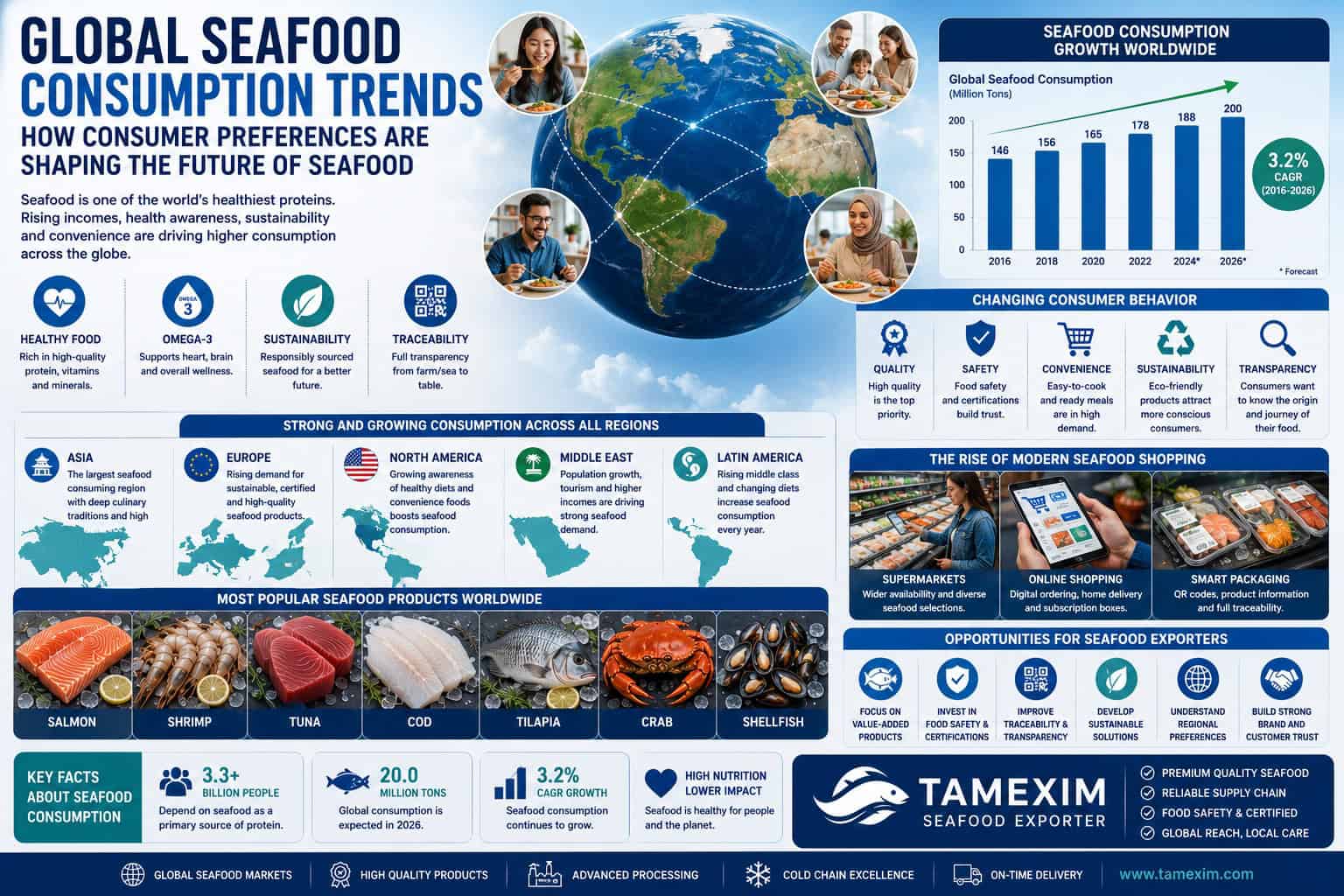
Global Seafood Consumption Trends: How Consumer Preferences Are Shaping the Future of Seafood
Seafood consumption has grown steadily over the past several decades, driven by population growth, rising incomes, increased health awareness, and improvements in global trade. Today, seafood is recognized as one of the healthiest and most sustainable sources of animal protein, making it an essential part of diets in many countries.
In 2026, consumer preferences continue to evolve. Buyers are no longer focused solely on price or availability. Instead, they increasingly value quality, freshness, sustainability, traceability, convenience, and nutritional benefits. These changing expectations are reshaping seafood production, processing, retail, and international trade.
For seafood exporters, understanding consumption trends is essential for identifying growth opportunities, selecting target markets, and developing products that meet modern consumer expectations.
Why Seafood Consumption Continues to Increase
Several long-term factors are supporting global seafood consumption.
These include:
Population growth
Urbanization
Rising household income
Health-conscious lifestyles
Expansion of aquaculture
Improved cold chain logistics
Greater product availability
International trade development
As seafood becomes more accessible, demand continues to expand across both developed and emerging economies.
Health Benefits Drive Consumer Demand
Health remains one of the strongest reasons consumers choose seafood.
Seafood is widely recognized as a rich source of:
High-quality protein
Omega-3 fatty acids
Vitamin D
Vitamin B12
Selenium
Iodine
Zinc
Many consumers associate regular seafood consumption with heart health, brain development, immune support, and overall wellness.
This perception continues to encourage higher seafood consumption worldwide.
Regional Consumption Patterns
Seafood consumption varies considerably between regions.
Asia
Asia remains the largest seafood-consuming region in the world.
Strong demand is supported by:
Large populations
Long culinary traditions
Coastal communities
Expanding aquaculture production
Growing middle-class income
Fish, shrimp, squid, shellfish, and seaweed are widely consumed throughout the region.
Europe
European consumers increasingly prefer:
Sustainably sourced seafood
Certified products
Fresh salmon
Cod
Tuna
Mussels
Ready-to-cook seafood
Food safety and traceability strongly influence purchasing decisions.
North America
Consumers in the United States and Canada continue to increase seafood consumption due to greater awareness of healthy diets.
Popular products include:
Salmon
Shrimp
Tuna
Crab
Lobster
Tilapia
Convenience products such as frozen fillets and ready-to-cook meals continue to gain market share.
Middle East
Seafood consumption is rising across Gulf countries due to:
Population growth
Tourism
Restaurant expansion
Higher disposable income
Government food security initiatives
Premium imported seafood enjoys particularly strong demand in hotels, supermarkets, and food service.
Consumer Preferences Are Changing
Modern consumers expect more than simply fresh seafood.
Important purchasing factors include:
Product quality
Competitive pricing
Sustainability
Country of origin
Food safety
Traceability
Attractive packaging
Convenience
Companies that understand these expectations can strengthen customer loyalty and increase export opportunities.
Growth of Ready-to-Cook Seafood
Convenience has become a major purchasing driver.
Consumers increasingly purchase:
Marinated fish fillets
Breaded seafood
Vacuum-packed seafood
Frozen ready meals
Portion-controlled products
Pre-seasoned shrimp
Value-added products help retailers increase sales while offering consumers greater convenience.
Sustainability Influences Buying Decisions
Environmental responsibility is becoming increasingly important.
Many consumers actively seek seafood that is:
Responsibly farmed
Sustainably harvested
Certified
Fully traceable
Environmentally friendly
Retailers continue expanding their sustainable seafood offerings in response to customer demand.
Digital Shopping Changes Seafood Retail
Online grocery shopping continues to transform seafood sales.
Retailers now offer:
Home delivery
Click-and-collect services
Digital product information
QR code traceability
Subscription seafood boxes
Digital commerce allows exporters to reach consumers through new distribution channels.
Premium Seafood Market Continues to Expand
Demand for premium seafood products continues to grow.
Consumers are increasingly willing to pay higher prices for:
Atlantic salmon
Large shrimp
Bluefin tuna
Live lobster
Snow crab
Premium shellfish
High-quality presentation and reliable cold chain management play an important role in premium market success.
Opportunities for Seafood Exporters
Exporters can benefit from these trends by:
Expanding value-added production
Investing in food safety systems
Improving traceability
Offering sustainable products
Developing premium product lines
Using modern packaging
Building strong brand identity
Understanding regional consumer preferences
Companies that align their products with consumer demand will be better positioned for long-term growth.
Frequently Asked Questions
Why is seafood consumption increasing?
Population growth, health awareness, improved aquaculture, and greater product availability continue to increase global seafood consumption.
Which seafood products are most popular?
Salmon, shrimp, tuna, cod, tilapia, crab, squid, and shellfish remain among the most widely consumed seafood products worldwide.
What do modern consumers expect?
Consumers increasingly value food safety, sustainability, traceability, quality, convenience, and environmentally responsible production.
How can exporters benefit from these trends?
By investing in quality, certifications, value-added products, strong branding, and understanding target market preferences, exporters can improve competitiveness and build long-term customer relationships.
Conclusion
Global seafood consumption continues to evolve as consumers become more health-conscious, environmentally aware, and quality-focused. Demand is no longer driven solely by availability or price. Instead, buyers increasingly seek products that combine nutrition, safety, sustainability, convenience, and transparency.
For seafood exporters, understanding these consumption trends provides valuable insights into future market opportunities. Companies that adapt to changing consumer preferences, invest in food safety and traceability, and deliver consistently high-quality products will be well positioned to succeed in the expanding global seafood market.