
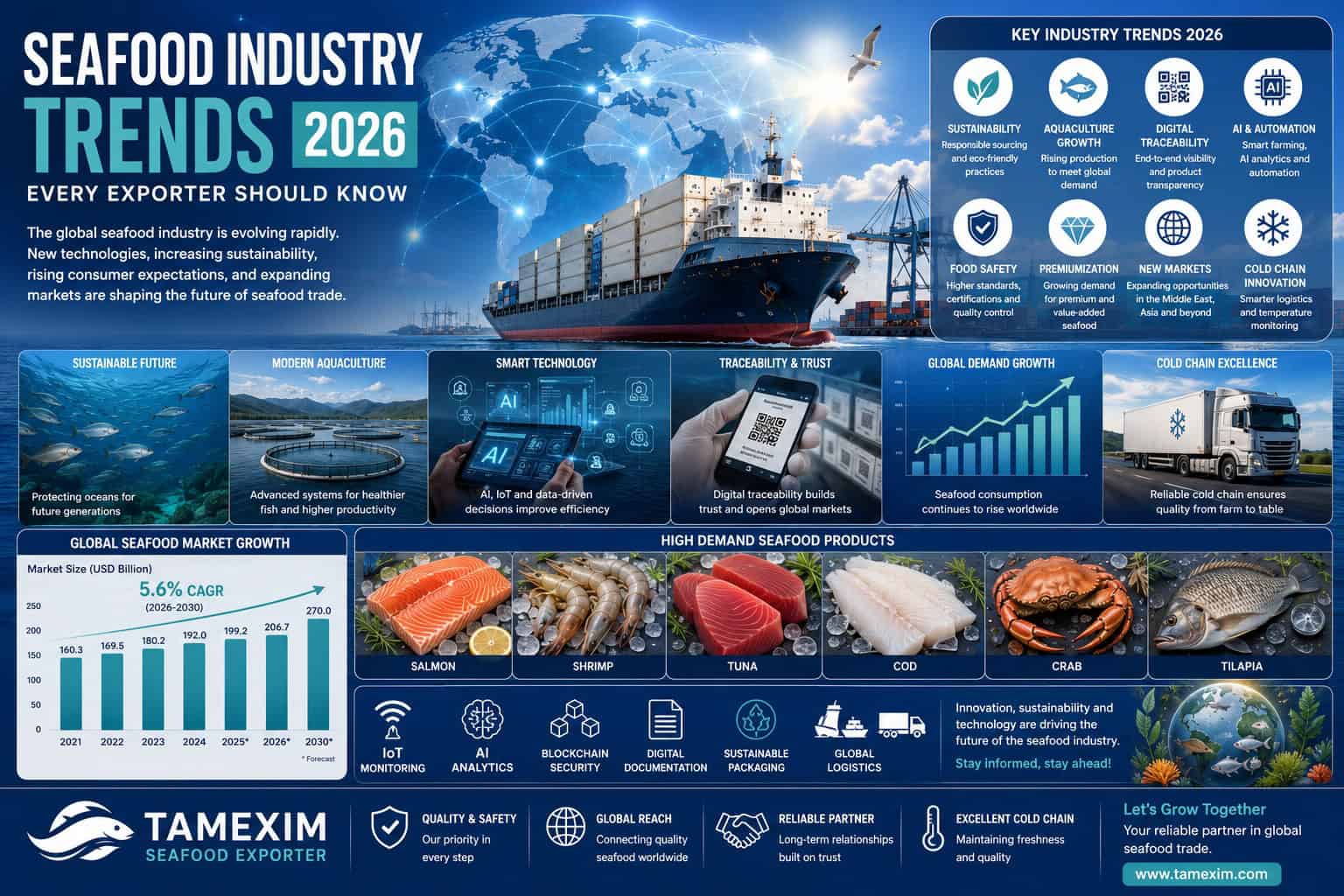
Seafood Industry Trends Every Exporter Should Know in 2026
The global seafood industry is evolving faster than ever before. Consumer expectations are changing, governments are introducing stricter regulations, technology is transforming production, and sustainability has become a major purchasing factor. For seafood exporters, understanding these trends is essential for maintaining competitiveness and identifying new business opportunities.
In 2026, successful seafood companies are no longer competing on price alone. Buyers increasingly evaluate suppliers based on food safety, product quality, environmental responsibility, traceability, logistics, and long-term reliability.
This article explores the most significant trends shaping the seafood industry and explains how exporters can prepare for the future.
Why Industry Trends Matter
Seafood markets are influenced by economic conditions, consumer behavior, environmental changes, technology, and international trade policies.
Monitoring industry trends helps exporters:
Identify new market opportunities
Anticipate customer demand
Improve product development
Reduce commercial risks
Strengthen long-term business planning
Stay ahead of competitors
Companies that adapt quickly often gain a significant competitive advantage.
Trend 1: Growing Demand for Sustainable Seafood
Sustainability is no longer a niche topic. It has become a central purchasing requirement for retailers, restaurants, distributors, and consumers.
Buyers increasingly look for seafood that is:
Responsibly farmed
Sustainably harvested
Fully traceable
Environmentally friendly
Certified by recognized organizations
Exporters that invest in sustainable practices often gain better access to premium markets.
Trend 2: Rapid Expansion of Aquaculture
Aquaculture continues to supply an increasing share of the world’s seafood.
Modern fish and shrimp farms are improving productivity through:
Better genetics
Precision feeding
Automated monitoring
Disease prevention
Water quality management
Smart farming technologies
As pressure on wild fisheries increases, aquaculture is expected to remain the primary driver of future seafood production.
Trend 3: Digital Traceability
International buyers increasingly require complete visibility throughout the supply chain.
Modern traceability systems include:
QR codes
Barcode systems
RFID technology
Cloud databases
Blockchain platforms
Digital documentation
These technologies improve transparency and simplify regulatory compliance.
Trend 4: Artificial Intelligence in Seafood Production
Artificial Intelligence (AI) is becoming an important tool across the seafood industry.
Applications include:
Automated feeding
Fish health monitoring
Image-based quality inspection
Predictive maintenance
Inventory optimization
Demand forecasting
AI improves efficiency while reducing operational costs.
Trend 5: Higher Food Safety Expectations
Food safety standards continue to become more demanding worldwide.
Importers increasingly expect suppliers to demonstrate:
HACCP implementation
Laboratory testing
Product traceability
Cold chain monitoring
Employee training
International certifications
Food safety has become a key competitive advantage rather than simply a regulatory requirement.
Trend 6: Growth of Premium Seafood Products
Consumers are willing to pay more for products offering superior quality, convenience, and sustainability.
Growing categories include:
Fresh premium salmon
High-quality shrimp
Ready-to-cook seafood
Smoked seafood
Portion-controlled fillets
Organic aquaculture products
Value-added products often generate higher profit margins than raw commodities.
Trend 7: Expansion of Middle East Seafood Markets
Countries across the Gulf region continue to increase seafood imports.
Key growth drivers include:
Population growth
Tourism
Hospitality expansion
Rising disposable income
Food security initiatives
Markets such as the UAE, Saudi Arabia, Qatar, and Kuwait offer attractive opportunities for exporters capable of supplying consistent quality.
Trend 8: Smarter Cold Chain Logistics
Cold chain technology continues to improve.
Modern exporters increasingly use:
IoT temperature sensors
GPS shipment tracking
Automated alerts
Digital temperature records
Smart refrigerated containers
These innovations help reduce spoilage and improve product quality during transportation.
Trend 9: Consumer Demand for Transparency
Modern consumers increasingly want to know:
Where seafood was produced
How it was harvested
Whether it was farmed responsibly
Which certifications it holds
How it was transported
Transparent supply chains strengthen brand trust.
Trend 10: Climate Change and Industry Adaptation
Climate change continues to influence seafood production worldwide.
Potential impacts include:
Ocean warming
Changes in fish migration
Disease outbreaks
Extreme weather events
Water quality challenges
Companies investing in adaptive farming and sustainable resource management will be better prepared for future risks.
How Exporters Can Stay Competitive
Seafood exporters should focus on:
Investing in food safety systems
Improving traceability
Expanding value-added production
Following sustainability standards
Adopting digital technologies
Strengthening customer relationships
Monitoring emerging markets
Training employees continuously
Long-term competitiveness depends on continuous improvement rather than short-term cost reduction.
Frequently Asked Questions
What is the biggest trend in the seafood industry?
Sustainability, digital traceability, and aquaculture expansion are among the most influential trends shaping the industry.
Why are buyers demanding more transparency?
Consumers and regulators increasingly expect clear information about product origin, food safety, and environmental responsibility.
How is technology changing seafood production?
Artificial intelligence, IoT monitoring, automation, and digital documentation are improving efficiency, quality, and traceability.
Which markets offer the greatest growth opportunities?
The Middle East, Southeast Asia, and premium retail markets in Europe and North America continue to provide strong opportunities for qualified seafood exporters.
Conclusion
The seafood industry in 2026 is being shaped by innovation, sustainability, and rising consumer expectations. Companies that embrace modern production technologies, strengthen food safety systems, improve transparency, and invest in responsible practices will be better positioned to succeed in international markets.
Rather than reacting to change, successful exporters anticipate market trends and adapt their strategies accordingly. By staying informed and continuously improving operations, seafood businesses can build stronger customer relationships and achieve sustainable long-term growth.