
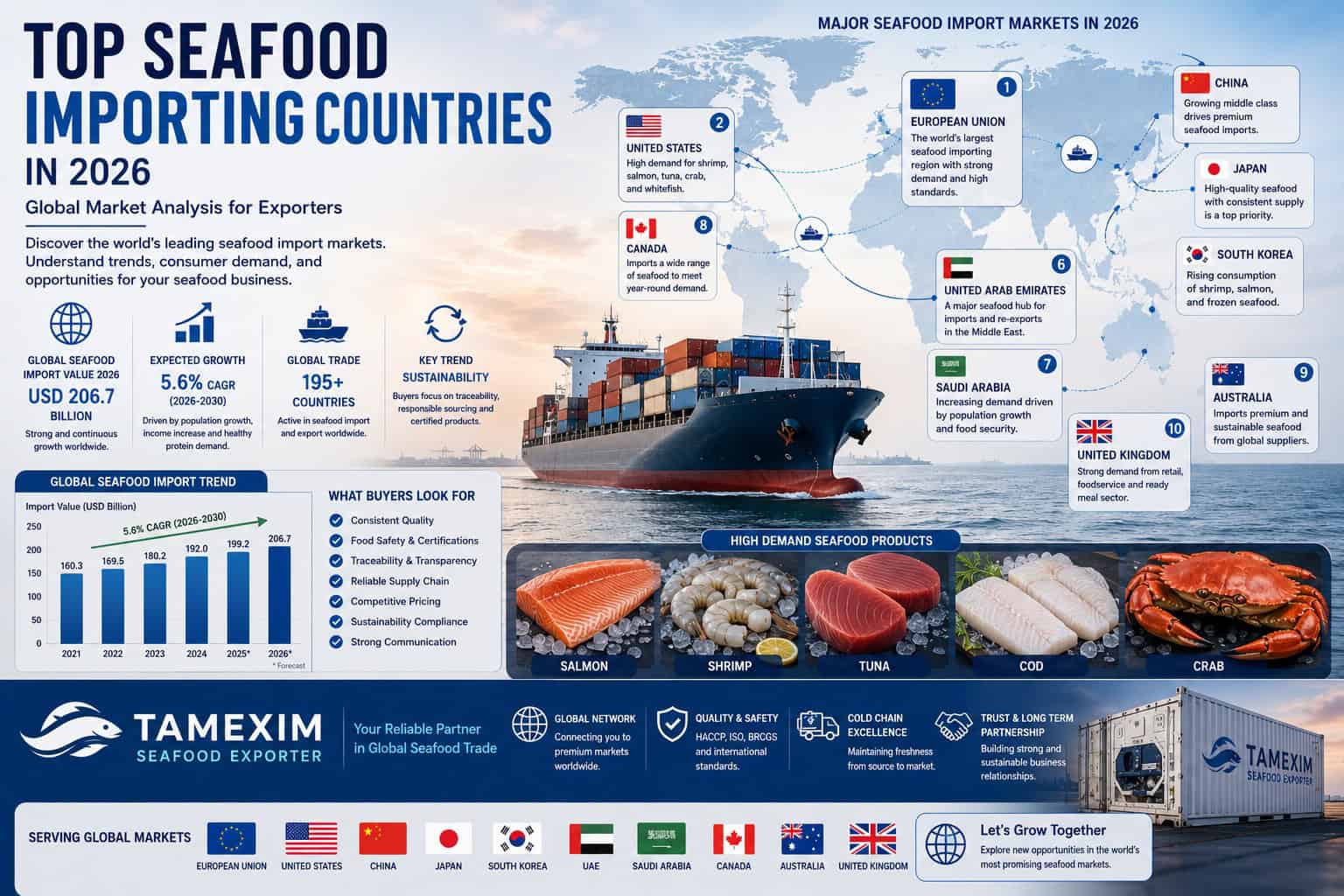
Top Seafood Importing Countries in 2026: Global Market Analysis for Exporters
SEO Title: Top Seafood Importing Countries in 2026 | Global Seafood Market Analysis
Focus Keyword: Top Seafood Importing Countries
Meta Description: Discover the world’s largest seafood importing countries in 2026. Learn about import trends, market opportunities, consumer demand, and key export destinations for seafood businesses.
Top Seafood Importing Countries in 2026: Global Market Analysis for Exporters
International seafood trade continues to expand as consumers around the world seek healthy, high-quality protein sources. While many countries produce seafood domestically, demand often exceeds local supply, creating significant opportunities for exporters.
Understanding which countries import the most seafood is essential for businesses planning to expand into international markets. Successful exporters not only identify high-demand markets but also understand each country’s regulations, consumer preferences, purchasing power, and import requirements.
This report examines the world’s leading seafood importing countries in 2026 and highlights the opportunities they offer to seafood exporters.
Why Import Markets Matter
Import markets drive global seafood trade. Countries with strong purchasing power and limited domestic production rely heavily on imported seafood to meet consumer demand.
Studying import markets helps exporters:
Identify profitable destinations.
Understand consumer preferences.
Plan market entry strategies.
Select suitable seafood products.
Improve pricing decisions.
Build long-term partnerships.
Market research reduces export risks and improves competitiveness.
Top Seafood Importing Countries
1. European Union
The European Union remains the world’s largest seafood importing region.
Growing demand, high seafood consumption, and limited domestic production make the EU one of the most attractive destinations for exporters.
Popular imported products include:
Atlantic Salmon
Shrimp
Tuna
Cod
Haddock
Mussels
Squid
European buyers place strong emphasis on:
Food safety
Sustainability
Product traceability
International certifications
Reliable cold chain management
2. United States
The United States imports billions of dollars worth of seafood every year.
High consumer demand, restaurant consumption, and retail sales continue to drive imports.
Major imported products include:
Shrimp
Salmon
Tilapia
Tuna
Crab
Lobster
Catfish
Exporters targeting the U.S. market must comply with FDA regulations and HACCP requirements.
3. China
Although China is one of the world’s largest seafood producers, it also imports significant quantities of seafood.
Imports are driven by:
Growing middle-class income.
Premium seafood demand.
Food service expansion.
Seafood processing industries.
High-value seafood products are becoming increasingly popular among Chinese consumers.
4. Japan
Japan remains one of the world’s most important seafood markets.
Consumers value:
Exceptional freshness.
Premium quality.
Consistent supply.
Strict food safety standards.
Popular imports include:
Tuna
Salmon
Shrimp
Crab
Scallops
Sea Urchin
Japanese buyers often establish long-term relationships with reliable suppliers.
5. South Korea
South Korea has experienced steady growth in seafood consumption.
Key imported products include:
Frozen shrimp
Salmon
Pollock
Crab
Squid
Mackerel
Buyers prioritize product quality, traceability, and efficient logistics.
6. United Arab Emirates
The UAE has become one of the Middle East’s leading seafood import hubs.
Growth is supported by:
Tourism
Luxury hospitality
Population growth
Re-export activities
Demand continues to rise for:
Fresh fish
Frozen seafood
Premium salmon
Shrimp
Live seafood
7. Saudi Arabia
Saudi Arabia is rapidly expanding its seafood market as part of broader food security initiatives.
Growing demand comes from:
Restaurants
Hotels
Retail supermarkets
Food service companies
Imported seafood includes:
Shrimp
Salmon
Tuna
Whitefish
Value-added seafood products
8. Canada
Canada imports seafood to complement domestic production and meet year-round consumer demand.
Popular imports include:
Shrimp
Salmon
Tilapia
Tuna
Frozen fish fillets
Canadian buyers generally seek suppliers with strong food safety systems and consistent quality.
9. Australia
Australia imports a wide range of seafood products despite its own fishing industry.
Consumers increasingly prefer:
Sustainably sourced seafood.
Premium imported products.
Ready-to-cook seafood.
Strict quarantine and food safety regulations apply to imported products.
10. United Kingdom
The United Kingdom remains one of Europe’s largest seafood importers.
Demand is driven by:
Supermarkets
Restaurants
Fish and chip shops
Ready meal manufacturers
Popular imports include:
Cod
Haddock
Salmon
Tuna
Shrimp
What International Buyers Look For
Successful exporters understand that buyers evaluate suppliers based on more than price.
Key purchasing criteria include:
Consistent quality
Competitive pricing
Reliable delivery
HACCP implementation
Product traceability
International certifications
Professional communication
Stable supply capacity
Companies that consistently meet these expectations are more likely to secure long-term contracts.
Emerging Opportunities
Several trends are creating new export opportunities:
Growth of premium seafood products
Expansion of aquaculture
Increasing demand for sustainable seafood
Rising online grocery sales
Greater interest in value-added seafood
Stronger demand in the Middle East
Improved cold chain infrastructure
Exporters that monitor these trends can better position themselves in global markets.
Frequently Asked Questions
Which country imports the most seafood?
The European Union collectively represents the largest seafood importing market, followed by major individual countries such as the United States, China, and Japan.
Which seafood products are most commonly imported?
Shrimp, salmon, tuna, cod, crab, squid, tilapia, and frozen fish fillets are among the most widely traded products.
What certifications do buyers expect?
Many buyers require HACCP implementation, while some markets also prefer ISO 22000, BRCGS, ASC, MSC, or GlobalG.A.P. certification depending on the product.
Why is market research important?
Understanding import markets helps exporters identify opportunities, meet buyer expectations, and reduce commercial risks.
Conclusion
Global seafood imports continue to grow as consumers demand safe, nutritious, and sustainably sourced seafood. The European Union, the United States, China, Japan, South Korea, and the Gulf countries remain among the most attractive destinations for exporters.
Companies that invest in food safety, traceability, quality assurance, and strong customer relationships are well positioned to succeed in these competitive markets. By understanding the unique characteristics of each importing country, seafood exporters can develop more effective strategies and build lasting partnerships worldwide.