
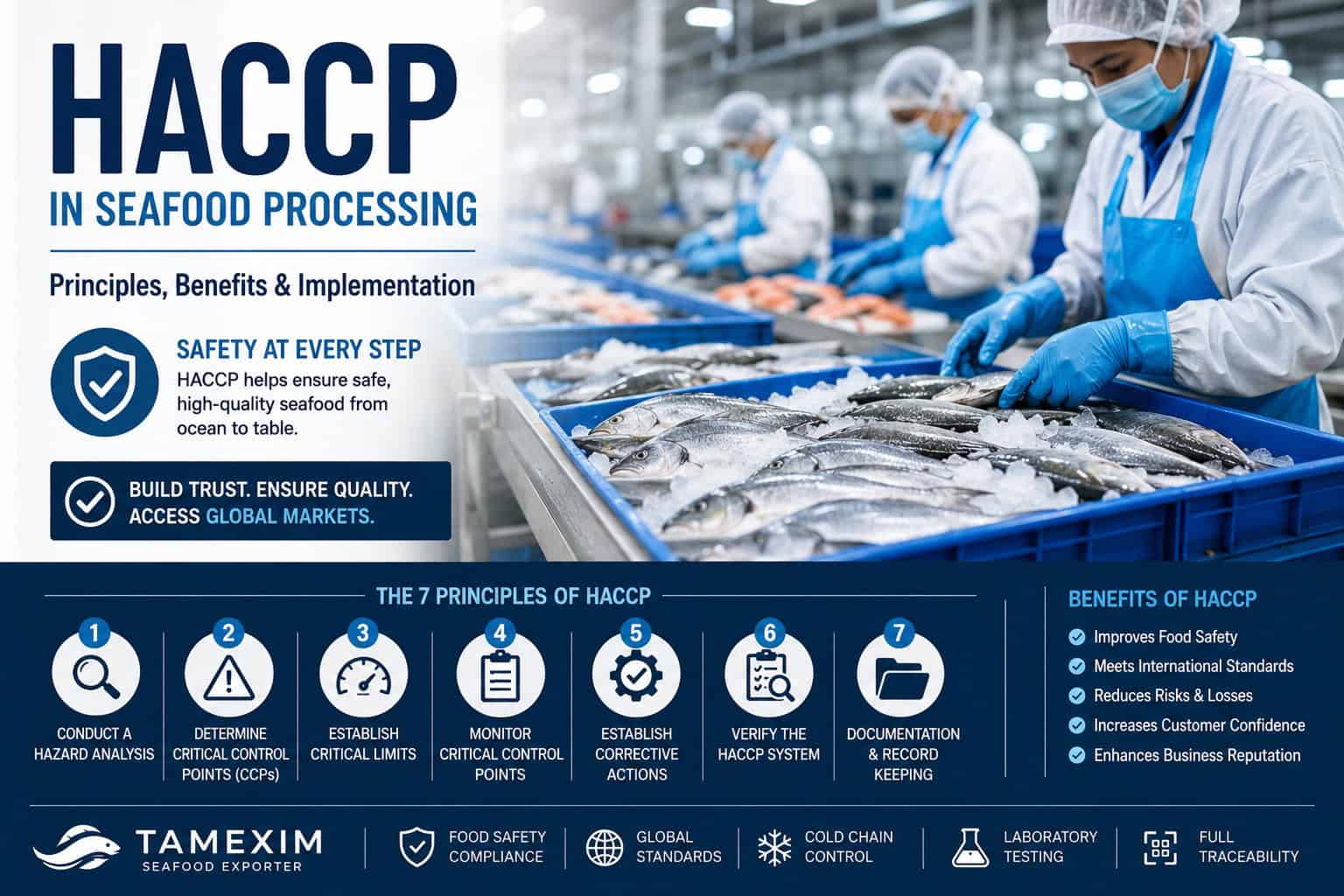
HACCP in Seafood Processing: Principles, Benefits & Implementation
SEO Title: HACCP in Seafood Processing | Complete Guide for Seafood Exporters
Focus Keyword: HACCP in Seafood Processing
Meta Description: Learn how HACCP improves seafood safety, reduces food safety risks, and helps seafood exporters comply with international regulations. A complete guide for processors, exporters, and importers.
HACCP in Seafood Processing: Principles, Benefits & Implementation
Seafood is one of the most sensitive food products in the global food supply chain. Unlike many processed foods, fresh and frozen seafood can rapidly deteriorate if hazards are not effectively controlled during harvesting, processing, storage, or transportation. To protect consumers and ensure international trade compliance, seafood processors around the world rely on the Hazard Analysis and Critical Control Point (HACCP) system.
HACCP is recognized globally as the foundation of modern food safety management. Rather than detecting problems after production, HACCP focuses on preventing hazards before they occur. This proactive approach helps seafood exporters produce safer products, reduce waste, comply with international regulations, and build trust with buyers.
Whether you export fish, shrimp, shellfish, or aquaculture products, implementing HACCP is no longer optional in most international markets. It is an essential requirement for accessing premium markets such as the European Union, the United States, Canada, Australia, Japan, and many Gulf countries.
What Is HACCP?
HACCP stands for Hazard Analysis and Critical Control Points.
It is a preventive food safety management system designed to identify, evaluate, and control hazards that could affect food safety throughout the production process.
Instead of relying solely on final product testing, HACCP identifies risks at every stage of production and establishes control measures before hazards reach consumers.
The HACCP system is recognized by international organizations including:
Codex Alimentarius
World Health Organization (WHO)
Food and Agriculture Organization (FAO)
U.S. Food and Drug Administration (FDA)
European Union food safety authorities
Today, HACCP serves as the backbone of nearly every modern food safety certification program.
Why HACCP Is Essential for Seafood Processing
Seafood is exposed to numerous biological, chemical, and physical hazards from the moment it is harvested until it reaches the final consumer.
Without an effective food safety system, contamination may occur during:
Harvesting
Landing
Transportation
Processing
Packaging
Cold storage
Distribution
Implementing HACCP provides significant benefits for seafood businesses, including:
Improved food safety
Compliance with export regulations
Reduced product recalls
Lower production losses
Increased buyer confidence
Better process control
Enhanced company reputation
Easier access to international markets
Many retailers and importers require documented HACCP implementation before approving new suppliers.
The Seven Principles of HACCP
The HACCP system is based on seven internationally accepted principles.
Principle 1: Conduct a Hazard Analysis
The first step is identifying all potential hazards that may occur during seafood production.
These hazards include:
Pathogenic bacteria
Viruses
Parasites
Heavy metals
Antibiotic residues
Glass fragments
Metal contamination
Plastic particles
Each hazard is evaluated based on its likelihood and severity.
Principle 2: Determine Critical Control Points (CCPs)
A Critical Control Point (CCP) is a production step where a hazard can be prevented, eliminated, or reduced to an acceptable level.
Typical CCPs in seafood processing include:
Cooking temperature
Freezing process
Metal detection
Chilling after harvest
Cold storage
Water sanitation
Proper identification of CCPs is essential for maintaining product safety.
Principle 3: Establish Critical Limits
Each CCP must have measurable limits.
Examples include:
| Critical Control Point | Example Critical Limit |
|---|---|
| Frozen storage | −18°C or below |
| Chilled storage | 0–4°C |
| Cooking | Minimum internal temperature according to product specifications |
| Metal detector | Detects specified ferrous and non-ferrous contaminants |
Critical limits should be scientifically validated and regularly reviewed.
Principle 4: Monitor Critical Control Points
Continuous monitoring ensures that every CCP remains within acceptable limits.
Monitoring activities may include:
Temperature recording
Time monitoring
Visual inspections
Equipment calibration
Digital data logging
Modern seafood processing facilities often use automated monitoring systems to improve accuracy and traceability.
Principle 5: Establish Corrective Actions
Whenever monitoring indicates that a critical limit has been exceeded, corrective actions must be taken immediately.
Examples include:
Isolating affected products
Adjusting processing parameters
Repairing equipment
Re-inspecting products
Documenting the incident
Corrective actions help prevent unsafe products from entering the market.