
Introduction
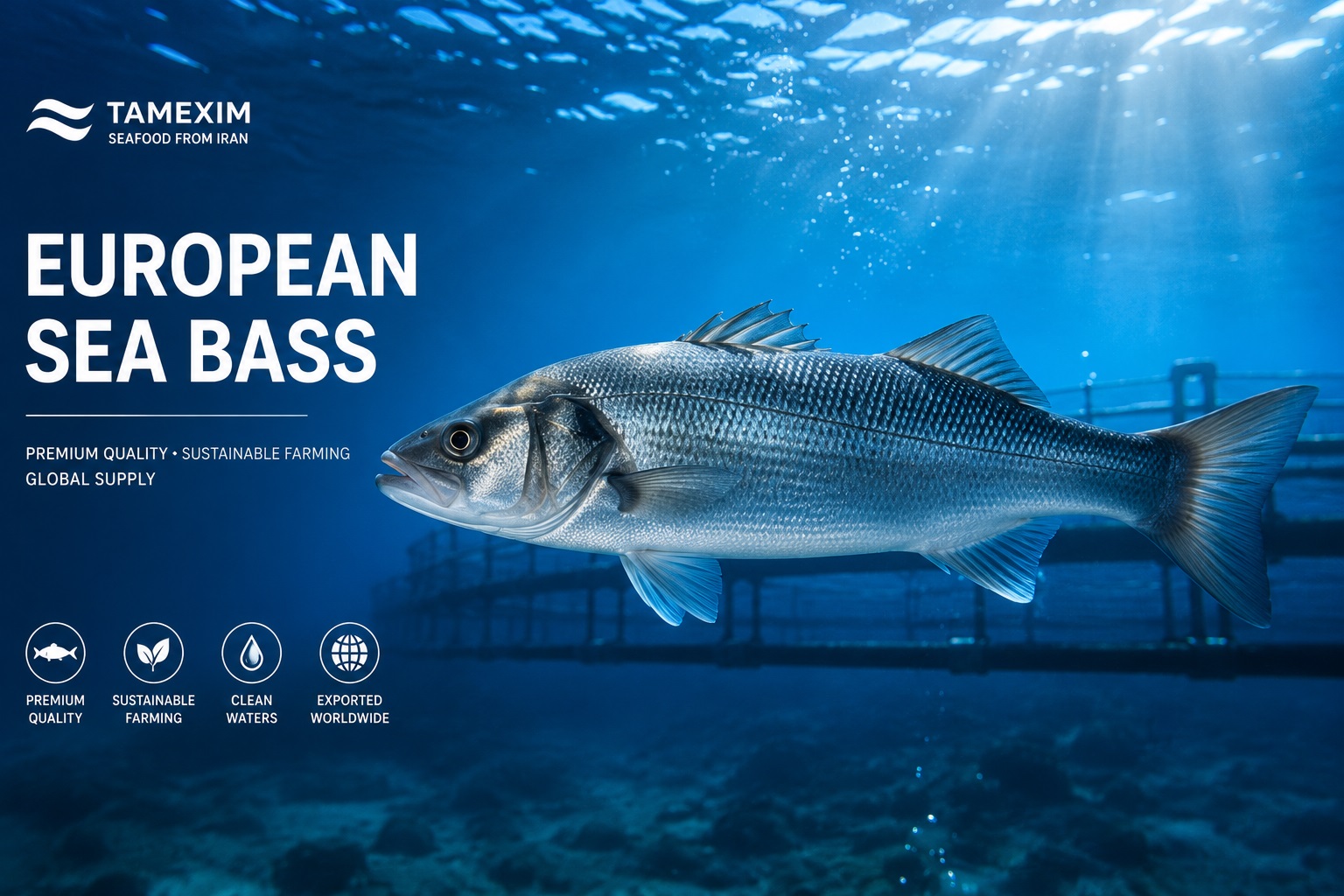
European Sea Bass (Dicentrarchus labrax) has become one of the fastest-growing aquaculture species in Iran. Valued for its delicate flavor, firm white flesh, and excellent nutritional profile, sea bass is increasingly produced using modern marine farming systems to meet the growing demand from international seafood markets.
With advanced farming techniques and strict quality standards, Iranian European sea bass offers a reliable source of premium seafood for importers, wholesalers, retailers, and the food service industry.
Table of Contents
- About European Sea Bass
- Sea Bass Farming in Iran
- Farming Environment
- Product Quality
- Nutritional Benefits
- Harvest Sizes
- Export Opportunities
- Frequently Asked Questions
About European Sea Bass
European Sea Bass is one of the most popular marine fish species in Mediterranean and international cuisine. Its mild taste, tender texture, and versatility make it a preferred choice for restaurants, hotels, and seafood retailers.
Sea Bass Farming in Iran
Iran has expanded marine aquaculture along its southern coastline, using modern farming technologies to produce healthy sea bass with consistent quality.
Production focuses on:
- Sustainable farming practices
- Healthy fish growth
- Controlled feeding programs
- High biosecurity standards
- Continuous quality monitoring
Farming Environment
European sea bass is raised in carefully managed marine environments where factors such as water quality, salinity, oxygen levels, and temperature are monitored to ensure optimal growth and fish welfare.
These conditions help produce fish with excellent appearance, texture, and freshness.
Product Quality
Iranian European Sea Bass is recognized for:
- Bright white flesh
- Firm texture
- Mild, delicate flavor
- Excellent freshness
- High processing quality
Available export products include:
- Whole Fish
- Gutted Fish
- Fresh Fillets
- Frozen Fillets
- Vacuum-Packed Products
Nutritional Benefits
European Sea Bass is an excellent source of:
- High-quality protein
- Omega-3 fatty acids
- Vitamin D
- Vitamin B12
- Selenium
- Potassium
Its balanced nutritional profile makes it a healthy choice for consumers seeking premium seafood.
Harvest Sizes
Typical export sizes include:
| Product | Average Size |
|---|---|
| Small Sea Bass | 300–500 g |
| Medium Sea Bass | 500–800 g |
| Large Sea Bass | 800–1200 g |
| Premium Sea Bass | 1.2–2 kg |
Customized sizes can be supplied based on customer requirements.
Export Opportunities
European Sea Bass from Iran is increasingly supplied to international markets due to its:
- Premium product quality
- Reliable year-round production
- Competitive pricing
- Flexible processing options
- Professional export packaging
These advantages make it an attractive choice for distributors, retailers, and hospitality businesses.
Frequently Asked Questions
Is Iranian European Sea Bass suitable for export?
Yes. It is produced under modern aquaculture standards and can be supplied to international markets in accordance with destination-country regulations.
Which product forms are available?
Whole fish, gutted fish, fresh fillets, frozen fillets, and vacuum-packed products are commonly available.
What makes European Sea Bass popular?
Its mild flavor, firm texture, white flesh, and versatility in cooking make it one of the world’s most sought-after marine fish species.
Conclusion
European Sea Bass farming is an important part of Iran’s growing marine aquaculture industry. By combining sustainable production methods with modern processing and reliable export logistics, Iranian producers are delivering premium sea bass to international buyers. For seafood importers looking for consistent quality and dependable supply, Iranian European Sea Bass represents an excellent sourcing opportunity.