
Introduction
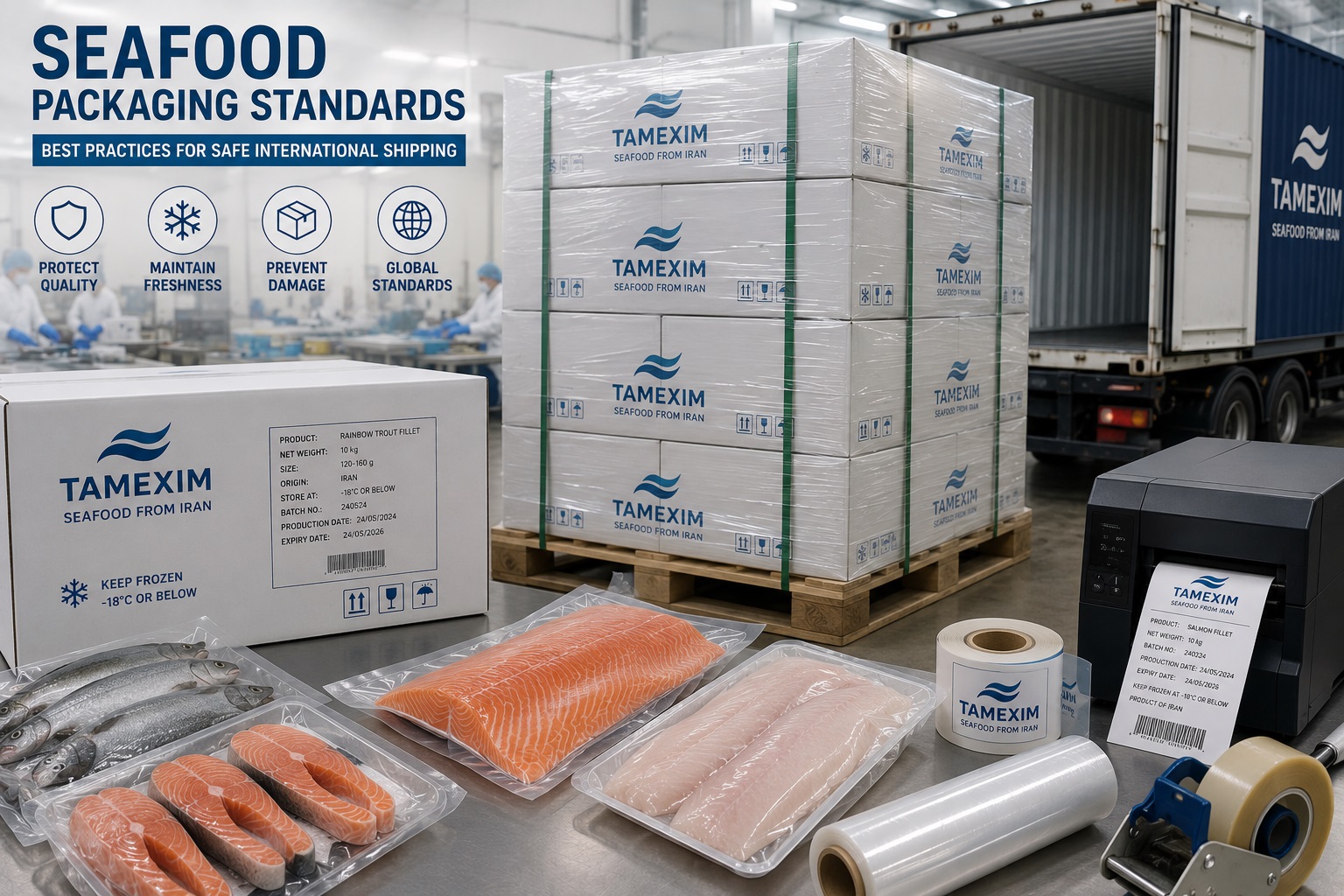
Proper packaging is essential for maintaining seafood quality during international transportation. Well-designed export packaging protects products from physical damage, temperature fluctuations, and contamination while ensuring compliance with international food safety and logistics requirements.
Table of Contents
- Why Packaging Matters
- Common Packaging Materials
- Vacuum Packaging
- IQF Packaging
- Export Labels
- Cartons & Pallets
- Packaging Best Practices
- FAQ
Why Packaging Is Important
Professional packaging helps:
- Protect product quality
- Prevent contamination
- Reduce transportation damage
- Extend shelf life
- Improve buyer confidence
- Meet export regulations
Common Packaging Materials
Seafood exporters commonly use:
- Vacuum Bags
- Food-grade Plastic Liners
- EPS (Expanded Polystyrene) Boxes
- Corrugated Export Cartons
- Gel Ice Packs
- Stretch Wrap
- Wooden or Plastic Pallets
Vacuum Packaging
Vacuum packaging removes excess air from the package, helping to:
- Reduce oxidation
- Preserve freshness
- Improve product appearance
- Increase shelf life
It is widely used for fish fillets, salmon, trout, and frozen seafood products.
IQF Packaging
IQF (Individually Quick Frozen) products are frozen separately before packaging.
Advantages include:
- Easy portion control
- Better product appearance
- Reduced product waste
- Convenient handling
Export Label Requirements
A professional export label should include:
- Product Name
- Scientific Name (if required)
- Net Weight
- Production Date
- Expiration Date
- Storage Temperature
- Country of Origin
- Batch Number
- Manufacturer Information
Cartons and Pallets
For international shipping:
- Use moisture-resistant export cartons.
- Secure cartons with stretch film.
- Stack products evenly on pallets.
- Avoid overloading pallets.
- Leave proper airflow inside refrigerated containers.
Packaging Best Practices
To ensure successful deliveries:
- Use food-grade materials only.
- Check packaging integrity before loading.
- Maintain the cold chain throughout transportation.
- Label cartons clearly.
- Follow destination-country packaging regulations.
Frequently Asked Questions
Why is vacuum packaging recommended?
It helps preserve freshness, improves shelf life, and protects seafood during transportation.
What packaging is commonly used for frozen seafood?
Frozen seafood is typically packed in vacuum bags or IQF packaging and placed inside insulated export cartons.
Why are export labels important?
Accurate labeling helps customs authorities, logistics companies, and buyers identify products quickly and ensures compliance with international regulations.
Conclusion
Professional packaging is one of the most important factors in successful seafood exports. By using appropriate materials, accurate labeling, and internationally accepted packaging methods, exporters can protect product quality and deliver seafood safely to global markets.
Related Articles
- How to Export Seafood from Iran
- Seafood Export Documents Explained
- Cold Chain in Seafood Export
- Incoterms for Seafood Trade