
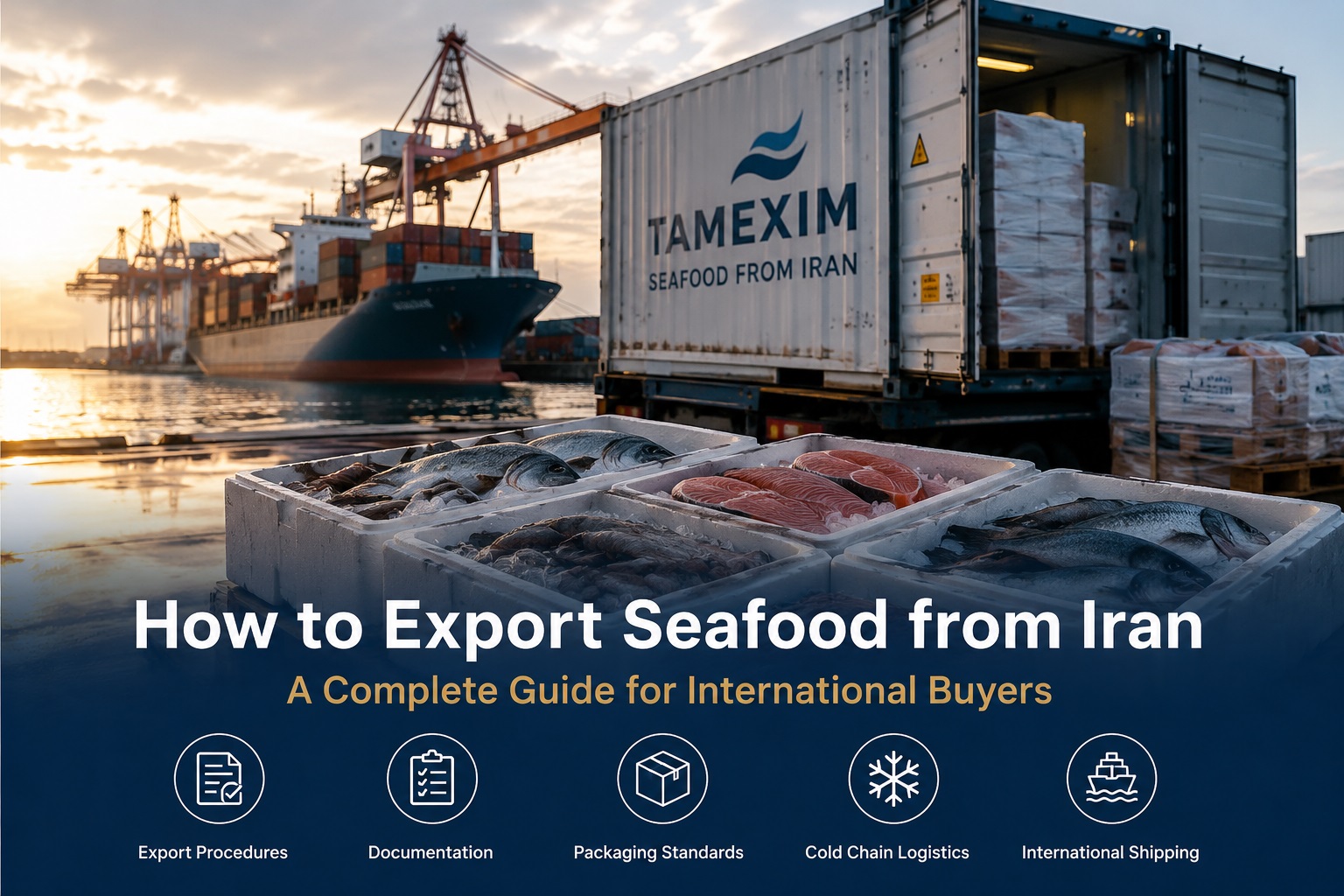
Introduction
Iran is one of the leading producers of high-quality seafood in the Middle East, offering products such as rainbow trout, sturgeon, caviar, carp, and other premium aquatic products. Exporting seafood requires proper documentation, quality control, cold chain management, and reliable logistics. This guide explains the complete seafood export process from Iran for importers, distributors, and international buyers.
Table of Contents
- Why Import Seafood from Iran?
- Popular Export Products
- Export Documents
- Packaging Requirements
- Cold Chain Logistics
- Shipping Methods
- Choosing a Reliable Supplier
- Frequently Asked Questions
Why Import Seafood from Iran?
Iran has access to the Caspian Sea, the Persian Gulf, and modern aquaculture farms, making it one of the region’s important seafood producers.
Key advantages include:
- Premium quality products
- Competitive prices
- International export experience
- Fresh and frozen seafood options
- Sustainable aquaculture production
Popular Seafood Export Products
Product Export Form Rainbow Trout Whole, Fillet Sturgeon Whole Fish, Caviar Carp Whole Fish Iranian Salmon Whole, Fillet Sea Bass Whole Fish Required Export Documents
International seafood exports generally require:
- Commercial Invoice
- Packing List
- Certificate of Origin
- Health Certificate
- Veterinary Certificate
- Bill of Lading or Air Waybill
- Export Customs Declaration
Packaging Standards
Proper packaging protects seafood quality during transportation.
Common packaging methods include:
- Vacuum Packaging
- IQF Frozen Products
- Poly Bags
- Master Cartons
- Insulated Boxes
- Refrigerated Containers
Cold Chain Management
Maintaining the cold chain is essential to preserve freshness and food safety.
Recommended storage temperatures:
- Fresh seafood: 0–4°C
- Frozen seafood: -18°C or lower
Continuous temperature control during storage, transportation, and delivery helps maintain product quality.
Shipping Methods
Depending on destination and product type:
- Air Freight
- Refrigerated Truck
- Reefer Container
- Sea Freight
Each method should be selected based on delivery time, product type, and destination market.
Choosing the Right Export Partner
A professional supplier should offer:
- Export experience
- International quality standards
- Reliable packaging
- Flexible logistics
- Responsive customer service
Working with an experienced exporter can reduce delays and simplify international trade.
Frequently Asked Questions
Can seafood be exported frozen?
Yes. Most international seafood exports are shipped as frozen products using refrigerated containers or air freight.
What is the recommended storage temperature?
Frozen seafood should generally be stored at -18°C or below, while fresh seafood is typically transported between 0°C and 4°C.
Which countries import Iranian seafood?
Iranian seafood is exported to various markets across Asia, the Middle East, the CIS region, and selected European destinations, depending on product type and regulatory requirements.
Conclusion
Exporting seafood from Iran offers international buyers access to high-quality products, competitive pricing, and a growing aquaculture industry. By following proper documentation, packaging, and cold chain practices, businesses can ensure safe and efficient delivery to global markets.
Call to Action
Looking for a Trusted Seafood Export Partner?
Tamexim supplies premium Iranian seafood with professional export support, international packaging, and reliable logistics.